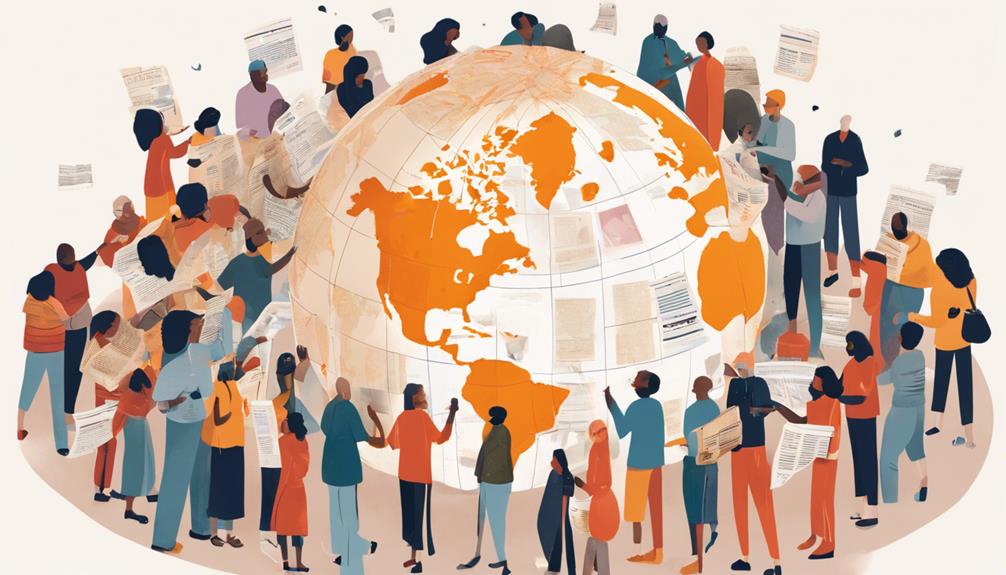
Through news stories, people connect across cultures, geographies, and struggles, fostering empathy and a sense of global citizenship. Shared experiences and personal narratives unite people, creating a sense of community and inspiring collective resilience. In times of adversity, stories bring people together, facilitating emotional support and comfort. By highlighting human interest stories, empathetic journalism promotes deeper understanding, breaks down stereotypes, and shapes a more compassionate worldview. As people come together through shared experiences, they forge a sense of belonging, transcending borders and boundaries. And as they explore these connections, they’ll discover even more threads that weave humanity together. Connecting with the news allows individuals to see the world through different perspectives, fostering mutual understanding and solidarity. By engaging with diverse narratives, people can recognize common struggles and triumphs, reinforcing the idea that humanity is deeply interconnected. In this way, journalism becomes a powerful tool for unity, bridging gaps and inspiring meaningful change.
Bridging the Gap Through Stories
Stories have a profound ability to transcend cultural, social, and geographical boundaries, bridging the gap between individuals and communities. They have the power to connect people from diverse backgrounds, fostering empathy and understanding. Through cultural exchange, stories can facilitate a deeper appreciation of different customs, traditions, and ways of life. This exchange can occur through various mediums, including literature, art, music, and film.
Personal narratives, in particular, have the ability to create a sense of belonging and community. By sharing their experiences, individuals can create a connection with others who have gone through similar struggles or triumphs. These stories can also serve as a reflection of our collective human experience, highlighting our shared values and aspirations. Moreover, they can inspire empathy and compassion, encouraging us to look beyond our differences and focus on our common humanity.
In today's world, where divisions and conflicts often dominate the headlines, stories have the potential to bring people together. By sharing our stories, we can build bridges between cultures, communities, and individuals. We can create a sense of unity and belonging, reminding us that, despite our differences, we are all connected through our shared human experience. Through stories, we can foster a deeper understanding of each other, promoting tolerance, empathy, and compassion.
Uniting Forces Against Adversity
When faced with adversity, people often find strength in unity, and it's in these moments that collective resilience shines. By sharing stories of overcoming shared struggles, individuals can inspire and motivate others to push through tough times. Through this collective effort, communities can emerge stronger and more united than ever before.
Overcoming Shared Struggles Together
Through collective efforts, people often find the strength to persevere against adversity, ultimately emerging stronger and more resilient on the other side. When faced with challenges, individuals can come together, combining their resources, skills, and experiences to overcome shared struggles. This collective approach fosters a sense of community healing, where people support one another, sharing their burdens and lifting each other up. As people unite against adversity, they create a powerful force that transcends borders and boundaries, giving rise to global solidarity.
In the face of adversity, people discover that they're not alone, and that others are facing similar challenges. This realization sparks a sense of belonging, as individuals recognize that they're part of a larger community that's working together to overcome obstacles. As people rally around a common cause, they develop a deeper understanding of one another, fostering empathy, compassion, and cooperation. By standing together against adversity, people can overcome even the most challenging challenges, emerging stronger, more resilient, and more united than ever before.
Collective Resilience in Action
In the aftermath of devastating natural disasters, communities worldwide have rallied together, mobilizing resources and expertise to mitigate the impact of these catastrophic events. This collective resilience in action is a proof of the power of unity in the face of adversity.
When disaster strikes, communities come together to support each other, demonstrating the true meaning of community spirit. This collective response is made possible by:
- Community Champions: ordinary individuals who rise to the challenge, providing critical support and resources to those in need.
- Crisis Response Teams: trained professionals who work tirelessly to rescue, relief, and rebuild affected areas.
- Neighborhood Networks: local organizations that mobilize volunteers, donations, and resources to support affected families.
- Virtual Support Systems: online platforms that connect people, share information, and provide emotional support during difficult times.
Through their collective efforts, communities can overcome even the most challenging challenges, emerging stronger and more resilient than before. By standing together, we can face adversity with courage, hope, and unity.
Human Connection in Hard Times
During times of crisis, people often turn to each other for emotional support, manifesting the power of human connection in the face of adversity. In these moments, strangers become allies, and neighbors become close friends. The crisis comfort they provide isn't just a fleeting sentiment; it's a tangible, palpable force that brings people together. This emotional intimacy is the foundation upon which communities are rebuilt, and it's what gets people through the darkest of times.
In the aftermath of a disaster, we see it time and time again: people from all walks of life coming together, putting aside their differences to support one another. It's a demonstration of the human spirit, which is capable of overcoming even the most insurmountable challenges. This collective resilience is rooted in the connections we make with one another, and it's what enables us to find the strength to carry on.
The stories of human connection in hard times are a powerful reminder that we're not alone. They show us that even in the darkest moments, there's always hope, always a way forward. And it's precisely this sense of connection that gives us the courage to face whatever challenges come our way. By embracing this crisis comfort, we can find the emotional intimacy we need to overcome even the toughest of times.
Shared Experiences Across Borders
Common humanity bridges geographical divides, as people from diverse backgrounds find solidarity in shared struggles and triumphs. As news stories transcend borders, they weave a tapestry of collective identity, reminding us that our experiences are intertwined. This global interconnectedness gives rise to a borderless friendship, where cultural exchange and international cooperation become the cornerstones of a global village.
In this shared human experience, universal emotions like joy, sorrow, and hope know no borders. The struggles for human rights, social justice, and environmental sustainability are common causes that unite us across nations. As we navigate the complexities of globalization, our shared experiences become the fabric of a collective identity, forging a sense of global citizenship.
Some examples of this shared humanity include:
- Natural disasters that evoke a global response, demonstrating our capacity for empathy and cooperation.
- The global outcry against social injustices, highlighting our common desire for equality and human rights.
- The exchange of cultural practices and traditions, enriching our understanding of diversity and promoting cross-cultural understanding.
- The collaborative efforts to address global challenges, such as climate change and pandemics, underscoring our interdependence.
Through shared experiences, we discover that our individual stories are part of a larger narrative, one that transcends borders and speaks to our shared humanity.
The Power of Empathetic Journalism
Empathetic journalists, tasked with capturing the human experience, skillfully weave together the threads of diverse perspectives, fostering a deeper understanding of the world's complexities. By doing so, they explore the human interest stories that resonate with people on a deeper level, instead of merely reporting.
Through empathetic journalism, media literacy is promoted, as readers are encouraged to engage critically with the news, analyzing multiple sources, and considering diverse viewpoints. This approach helps to break down stereotypes and misconceptions, allowing readers to develop a more nuanced understanding of the world around them. By sharing the stories of individuals from all walks of life, empathetic journalists bring people together, highlighting the commonalities that unite us, rather than the differences that divide us.
In this way, empathetic journalism serves as a powerful tool for building bridges between communities, fostering a sense of belonging, and promoting global understanding. By stepping into the shoes of others, readers gain a deeper appreciation for the complexities of the human experience, and a more compassionate worldview begins to take shape. As a result, empathetic journalism has the power to unite people across borders, cultures, and backgrounds, creating a more harmonious and inclusive world.
Finding Common Ground Through News
Many news outlets are now recognizing the importance of finding common ground through news, leveraging the power of storytelling to transcend differences and foster a sense of shared humanity.
In an era of increasing polarization, news organizations are shifting their focus towards building bridges, rather than walls. By highlighting human interest stories, cultural exchanges, and global perspectives, they're creating a sense of community and promoting public discourse.
- News outlets are investing in media literacy programs to combat news fatigue and promote critical thinking.
- Social proof is being used to showcase the impact of community building initiatives, inspiring others to take action.
- Human interest stories are being used to put a face to global issues, fostering empathy and understanding.
- Cultural exchange programs are being initiated to promote cross-cultural understanding and break down stereotypes.
Frequently Asked Questions
How Can News Stories Promote Unity Among Diverse Communities?
When it rains, it pours, and news stories can be the silver lining that brings people together. By promoting community engagement and cultural exchange, news stories can bridge the gaps between diverse communities. They can highlight shared values and experiences, fostering a sense of belonging among readers. By sharing stories that celebrate differences and promote understanding, news outlets can help build a more united community, one story at a time.
What Role Do Journalists Play in Fostering Empathy and Understanding?
Journalists play a crucial role in fostering empathy and understanding by crafting stories that trigger human connection. By sharing personal narratives, they help readers walk in others' shoes, sparking empathy triggers that break down barriers. Through nuanced reporting, journalists facilitate a deeper understanding of diverse perspectives, encouraging a sense of belonging among diverse communities.
Can News Outlets Balance Objectivity With Emotional Storytelling?
She wonders if news outlets can balance objectivity with emotional storytelling. It's a pivotal dance between conveying facts and evoking emotions. To achieve this balance, media outlets must prioritize media ethics and journalistic integrity. By doing so, they can create nuanced, empathetic stories that resonate with audiences. It's essential to strike a balance, as emotional manipulation can be detrimental to trust.
How Do Personal Anecdotes Enhance the Impact of News Stories?
She's intrigued by the fact that 70% of people remember a story better when it's paired with a personal anecdote. This highlights the impact of personal anecdotes in news stories. By sharing relatable experiences, journalists create an emotional connection with their audience, amplifying the storytelling power of their reports. As readers invest in the human side of the story, they become more invested in the outcome, fostering a sense of community and understanding.
What Is the Ideal Balance Between Hard News and Human-Interest Stories?
She believes the ideal balance between hard news and human-interest stories lies in creating an emotional resonance with readers. By striking a balance, news outlets can provide an information hierarchy that caters to diverse readers' needs. Hard news provides essential facts, while human-interest stories add emotional depth, fostering a sense of community and belonging. This balance enables readers to engage with complex issues on a deeper level, leading to a more empathetic and informed public.

