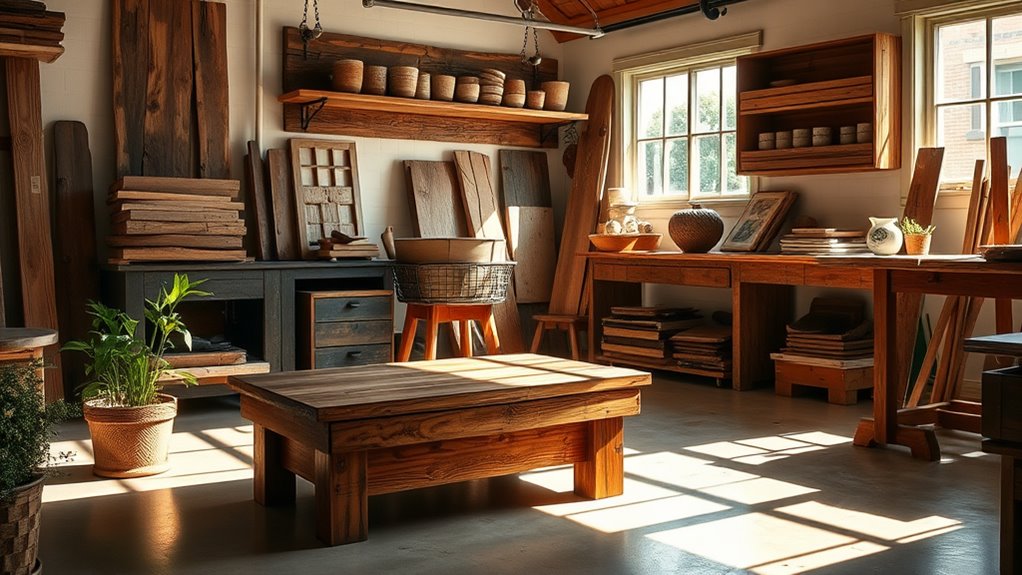
To add charm with reclaimed wood projects, start by selecting unique pieces that showcase character and history. Create custom furniture like live edge tables or rustic shelves to draw attention and spark conversation. Consider building accent walls using varying plank widths or patterns; this instantly boosts your space. Don't forget finishing touches—use oil or polyurethane to improve the wood's beauty and durability. Regular maintenance helps preserve your creations. With the right techniques and a touch of creativity, your projects can truly shine. There's plenty more to explore on how to transform your reclaimed wood into stunning pieces.
Benefits of Reclaimed Wood
Why should you consider using reclaimed wood for your next project? First off, it's an eco-friendly choice that greatly reduces your environmental impact. By repurposing wood from old buildings, barns, or furniture, you're diverting materials from landfills and minimizing the need for new lumber production. This means fewer trees cut down, less energy consumed, and a smaller carbon footprint for your project.
But it's not merely about being green; reclaimed wood likewise offers extraordinary aesthetic appeal. Each plank tells a story, showcasing unique textures, colors, and character that you simply can't replicate with new wood. Envision the charm of a rustic dining table or the warmth of wooden beams in your living space. These elements create an inviting atmosphere that improves the overall design of your home.
Moreover, using reclaimed wood allows you to connect with history and craftsmanship. You're not just choosing a material; you're selecting a piece of artistry that has already weathered the test of time. This adds a layer of authenticity to your project, making it stand out in a world full of mass-produced items.
Incorporating reclaimed wood into your designs not only boosts your project's innovation factor but also aligns with a growing trend in sustainability. So, if you're looking to make a statement whilst caring for the planet, reclaimed wood is the perfect choice for your next creative endeavor.
Choosing the Right Wood
When choosing reclaimed wood for your project, you need to assess the quality first. Look for signs of damage or rot, as these can impact the longevity of your piece. Next, identifying the type of wood will help you determine its characteristics and suitability for your specific needs.
Assessing Wood Quality
Choosing the right wood for your reclaimed projects is vital for guaranteeing both durability and aesthetic appeal. To assess wood quality effectively, start by paying attention to wood grading. This classification system helps you determine the wood's structural integrity and visual characteristics. Higher-grade wood typically features fewer knots and defects, making it ideal for eye-catching applications.
Next, consider the moisture content of the wood. Wood that's too moist can warp or crack over time, compromising your project. Aim for reclaimed wood with a moisture content of around 6-8%. If you're unsure, invest in a moisture meter; it's a simple tool that can save you headaches down the line.
As you evaluate potential pieces, look for signs of past use and age—these can add character to your project. Avoid wood that shows extensive damage or decay, as it may lack the longevity you desire. By focusing on wood grading and moisture content, you'll guarantee your reclaimed projects not just stand out but additionally stand the test of time. This careful assessment will help you innovate during the preservation of the charm that reclaimed wood brings to any space.
Identifying Wood Types
Identifying the right wood type for your reclaimed projects is crucial for achieving both functionality and style. Whether you're creating furniture, accent walls, or decorative pieces, knowing how to differentiate between hardwoods and softwoods can greatly influence your design.
Here's how to get started:
- Check the grain: Hardwoods typically have a more complex grain pattern, whereas softwoods often exhibit simpler lines.
- Feel the weight: Hardwoods are denser and heavier, making them ideal for sturdy constructions. Softwoods are lighter, which can be beneficial for decorative elements.
- Look for knots: Softwoods, such as pine, usually have more knots, giving them a rustic look. Hardwoods like oak tend to have fewer visible knots.
- Assess durability: Hardwoods are usually more durable and resistant to wear, perfect for high-traffic areas. If you're aiming for a softer aesthetic, softwoods can add warmth and charm.
Tools You'll Need
To successfully tackle reclaimed wood projects, you'll often need a specific set of tools that can make the process smoother and more efficient. First, gather vital tools like a circular saw or miter saw for precise cuts. A jigsaw can be invaluable for more intricate shapes or curves, allowing you to release your creativity. Don't forget a quality drill for driving screws and making pilot holes; it's a game-changer!
Safety equipment is important, too. Always wear safety goggles to protect your eyes from dust and flying debris. Hearing protection is likewise a must, especially when working with electric tools for extended periods. Gloves can prevent splinters and cuts, guaranteeing you're comfortable during the handling of reclaimed wood.
A measuring tape and square will help you verify accuracy in your cuts and alignments, which is especially significant when working with salvaged materials that may not be perfectly uniform. A sander is vital for smoothing out surfaces and removing any rough edges, giving your projects a polished look.
Finally, a good workbench or sawhorses provides a stable surface for cutting and assembling your projects. With these tools and safety gear in hand, you'll be well-equipped to transform reclaimed wood into stunning, innovative pieces that add charm to any space. So, gear up, release your imagination, and explore your next reclaimed wood adventure!
Creating Accent Walls
In the sphere of adding character to a room, creating an accent wall with reclaimed wood can transform your space into something truly unique. Not just does it bring warmth and texture, but it additionally allows for creativity in your design. You can play with various accent wall styles and wood color combinations to achieve the perfect vibe for your home.
To help you visualize your project, consider these four ideas:
- Vertical Planks: Arrange reclaimed wood vertically to create a striking, elongated effect. This style draws the eye upward, making the room feel taller and more spacious.
- Horizontal Strips: Go for a modern look with horizontal strips. This style can make a room feel more expansive and laid-back, perfect for casual spaces.
- Mixed Widths: Use boards of varying widths for an eclectic appearance. This adds depth and visual interest, allowing each piece to tell its own story.
- Staggered Patterns: Create a unique mosaic by staggering pieces in various directions. This bold choice can serve as a conversation starter and a focal point in the room.
Experimenting with different wood color combinations can further improve the overall look. Whether you prefer a rustic charm or a sleek contemporary aesthetic, reclaimed wood offers endless possibilities to personalize your space. So roll up your sleeves and get ready to add that touch of innovation to your home!
Building Custom Furniture
Building custom furniture with reclaimed wood lets you express your unique style during making a sustainable choice. You'll discover how to incorporate distinctive design elements and benefit from sourcing materials responsibly. Plus, I'll share some handy DIY assembly tips to help you bring your vision to life.
Unique Design Elements
Creating custom furniture from reclaimed wood allows you to incorporate unique design elements that reflect your personal style and the story behind the materials. By embracing rustic aesthetics and vintage appeal, you can craft pieces that not only serve a function but additionally become conversation starters. Here are some innovative design ideas to contemplate:
- Live Edge Tables: Retain the natural contours of the wood for a stunning centerpiece that showcases its organic beauty.
- Mixed Materials: Combine reclaimed wood with metal or glass to create a striking contrast that raises your furniture's design.
- Upcycled Hardware: Incorporate vintage knobs, hinges, or fixtures to add character and a nostalgic touch to your creations.
- Custom Staining: Experiment with stains and finishes that improve the wood's grain, allowing you to achieve a look that's uniquely yours.
Sustainable Sourcing Benefits
As you explore the domain of custom furniture, consider the sustainable sourcing benefits that come with using reclaimed wood. By choosing reclaimed materials, you're not merely making a bold design statement but also embracing ethical sourcing practices. This approach considerably lessens the environmental impact of your projects, allowing you to create stunning pieces without depleting our forests.
Here's a look at some key benefits of using reclaimed wood:
| Benefit | Description | Impact |
|---|---|---|
| Reduces Waste | Utilizes materials that would otherwise be discarded | Minimizes landfill overflow |
| Preserves Resources | Decreases demand for new lumber | Protects forests and ecosystems |
| Unique Aesthetic | Offers one-of-a-kind character and history | Enhances design innovation |
| Lowers Carbon Footprint | Reduces energy consumption associated with new wood | Contributes to climate health |
| Supports Local Economy | Often sourced from local suppliers | Strengthens community ties |
DIY Assembly Tips
When commencing on a custom furniture project, having a solid assembly plan can make all the difference. By integrating innovative assembly techniques into your project planning, you can guarantee a smooth and efficient build. Here are four crucial tips to guide you:
- Sketch It Out: Start with a detailed drawing of your design. This visual blueprint will help you visualize the final piece and identify necessary cuts and joints.
- Choose Your Joinery: Experiment with various joinery methods, like dovetails or pocket holes. Selecting the right technique can improve both strength and aesthetics.
- Prep Your Materials: Before you start assembling, make certain all reclaimed wood pieces are properly treated and sanded. This not only improves appearance but additionally guarantees a better bond.
- Dry Fit First: Assemble your pieces without glue or screws first. This allows you to troubleshoot any issues before committing to the final assembly, ensuring everything fits perfectly.
Crafting Decorative Items
Reclaimed wood offers endless possibilities for crafting decorative items that add character to your home. By using this unique material, you can create stunning pieces that not just improve your space but additionally tell a story. Think about the charm of decorative signs that feature witty quotes or personalized messages. You can easily transform a weathered plank into a statement piece that welcomes guests or inspires creativity.
Consider making rustic decor elements like candle holders or picture frames. A simple, yet effective approach is to cut and sand pieces of reclaimed wood into various shapes and sizes. By combining different textures and finishes, you'll develop a layered look that captures attention. You can even experiment with paint or stencils to add color or design, ensuring your decorative items reflect your personal style.
Another innovative idea is to craft wall art. Gather several small pieces of reclaimed wood and arrange them into an eye-catching collage. You can incorporate different stains or leave some in their natural state for a more eclectic feel. This not just brings warmth to your walls but additionally sparks conversation.
Don't forget about functional decor; think about making rustic coat racks or key holders. These items serve a practical purpose while additionally showcasing the beauty of reclaimed wood. Embrace your creativity, and let your imagination run wild as you craft decorative items that uplift your home's aesthetic and embody your unique flair.
Upcycling Old Wood
Upcycling old wood takes your creativity a step further, transforming discarded materials into functional and stylish pieces. By embracing creative upcycling, you're not merely saving resources; you're crafting unique elements that add charm to any space. Envision the satisfaction of turning a forgotten wooden pallet into something extraordinary. Here are four ideas to ignite your creativity:
- Coffee Table: Use reclaimed wood to create a stunning coffee table that becomes the focal point of your living room. Mix different wood types for a textured look, and don't shy away from incorporating metal legs for an industrial twist.
- Wall Art: Craft a rustic decor masterpiece by arranging old wood planks in an enthralling pattern. You can paint or stain them to match your aesthetic, creating a one-of-a-kind piece that expresses your personality.
- Bookshelves: Design open shelving using reclaimed wood for a chic yet functional storage solution. The natural imperfections of the wood will bring warmth and character to your home office or living space.
- Garden Planter: Create a charming planter box from old wood, giving your garden a rustic touch. Not only does it improve your outdoor space, but it is likewise a sustainable choice that shows off your commitment to upcycling.
Incorporating Wood in Outdoor Spaces
Wooden decking can transform your outdoor space into a cozy retreat, blending nature with style. Envision stepping outside onto a beautifully crafted deck that invites relaxation and social gatherings. To enhance the ambiance, consider incorporating stylish outdoor furniture made from reclaimed wood. Not only does this add character, but it additionally supports sustainability.
Enhance your garden with reclaimed planters that bring a rustic charm. These unique accents can showcase your favorite plants as well as providing a cohesive look to your outdoor decor. Pair them with striking outdoor art that captures attention and sparks conversation.
Don't forget about your patio decor. A well-designed seating area can serve as a focal point for gatherings, making it the perfect spot for summer barbecues or quiet evenings under the stars. Use wooden fences to create a sense of privacy while contributing to the overall aesthetic.
For a truly innovative touch, consider installing rustic pathways made from reclaimed wood. These pathways guide guests through your garden, offering a warm invitation to explore your outdoor sanctuary.
Finishing Techniques for Reclaimed Wood
When working with reclaimed materials, finishing techniques can greatly improve the beauty and durability of your projects. Utilizing the right staining techniques and finishing products can transform your reclaimed wood into stunning focal points. Here are four innovative approaches to contemplate:
- Oil Finishes: These penetrate deep into the wood, enriching its natural grain as well as offering protection. Choose a finish like tung oil for a water-resistant surface that highlights the rustic charm.
- Water-Based Stains: If you're after lively colors without sacrificing the wood's texture, water-based stains are your best bet. They dry quickly and emit fewer fumes, making them ideal for indoor projects.
- Polyurethane Coatings: For projects requiring durability, a polyurethane finish provides a tough, clear layer that resists scratches and moisture. It's perfect for high-traffic areas like furniture or flooring.
- Wax Finishes: If you prefer a softer, more natural feel, think about wax finishes. They're easy to apply, and you can layer them for added depth. Plus, they're eco-friendly and enrich the wood's tactile quality.
Maintenance Tips and Tricks
To keep your reclaimed wood projects looking their best, regular cleaning is crucial. You'll want to use gentle methods to avoid damaging the surface, and proper sealing can help protect the wood from wear and tear. Let's explore some effective techniques to maintain your beautiful pieces.
Regular Cleaning Techniques
Regular maintenance is essential for keeping your reclaimed wood projects looking their best. With the right cleaning techniques, you'll guarantee your pieces remain stunning and durable. Here are some effective methods to incorporate into your wood care routine:
- Dust Regularly: Use a microfiber cloth to gently wipe away dust and dirt. This prevents buildup and keeps the natural beauty of the wood visible.
- Use Gentle Cleaning Solutions: Opt for eco-friendly cleaning solutions particularly designed for wood. Avoid harsh chemicals that can damage the finish or integrity of the wood.
- Spot Clean Stains: For stubborn stains, mix a mild soap with water and apply it using a soft cloth. Always test a small area first to verify your cleaning solution doesn't affect the finish.
- Dry Thoroughly: After cleaning, make sure to dry the surface with a clean, dry cloth. This step is vital to prevent moisture from seeping into the wood, which can lead to warping.
Proper Sealing Methods
Proper sealing methods are crucial for protecting your reclaimed wood projects and ensuring their longevity. By implementing effective sealing techniques, you can improve both the beauty and durability of your creations. Let's explore some innovative protective coatings that can safeguard your wood against moisture, scratches, and wear.
| Sealing Technique | Benefits | Best Use Case |
|---|---|---|
| Polyurethane | Durable, moisture-resistant | High-traffic areas |
| Beeswax Finish | Natural look, easy to apply | Decorative items |
| Oil Finish | Deep penetration, improves grain | Furniture and fixtures |
When selecting a protective coating, consider the environment where your project will live. Polyurethane offers a tough barrier for everyday use, whereas beeswax provides a natural finish that's perfect for accent pieces. An oil finish penetrates deeply, enriching the wood's appearance and providing a subtle sheen.
Inspiring Reclaimed Wood Projects
Reclaimed wood projects can transform your space with unique charm and character. By embracing the art of creative repurposing, you're not merely creating stunning pieces; you're additionally making a statement about sustainability and artistic expression. Here are four inspiring ideas to spark your imagination:
- Rustic Coffee Table: Combine different wood planks to craft a one-of-a-kind coffee table. Add hairpin legs for a modern twist, blending the old with the new.
- Wall Art: Create a striking piece by arranging reclaimed wood into geometric shapes or abstract designs. This wall art can serve as a focal point in any room, showcasing your innovative flair.
- Bookshelf: Design a custom bookshelf using salvaged barn wood. The weathered look will add warmth and character to your space as it provides a functional storage solution.
- Garden Planter: Build a stylish raised garden bed using reclaimed wood. This not only enhances your gardening game but additionally brings a touch of rustic beauty to your outdoor area.
These projects illustrate how reclaimed wood can be transformed through your creativity and vision. Each piece tells a story, offering a blend of history and contemporary design. So gather your materials and let your imagination run wild; the possibilities are endless when you explore the realm of reclaimed wood!
Frequently Asked Questions
Where Can I Find Reclaimed Wood for My Projects?
Finding reclaimed wood for your projects can feel like a treasure hunt, but it's worth the effort. Start by exploring local suppliers who specialize in reclaimed materials; they often have unique pieces with stories to tell. You can likewise check out salvage yards and architectural salvage stores. Don't forget to join online communities focused on wood sourcing, where you can connect with others and discover hidden gems just waiting to be transformed.
How Do I Ensure Reclaimed Wood Is Safe for Indoor Use?
To guarantee reclaimed wood is safe for indoor use, start by checking for any wood treatment chemicals. Look for certifications that confirm safety. Consider conducting safety testing, like checking for lead or other harmful substances. It's essential to clean and sand the wood thoroughly to remove any contaminants. By taking these steps, you'll create a beautiful and safe environment in your home, blending innovation with responsible sourcing.
Can Reclaimed Wood Be Used in Humid Environments?
Did you know that about 70% of reclaimed wood can withstand humidity effects? Although reclaimed wood can be used in humid environments, you need to guarantee it has moisture resistance. Proper sealing and treatment methods can improve its durability, preventing warping or mold. If you embrace innovative techniques, you can effectively integrate reclaimed wood into your humid spaces, adding unique character and charm without sacrificing functionality. Just remember to maintain it regularly for the best results!
What Types of Finishes Are Best for Reclaimed Wood?
When choosing finishes for reclaimed wood, consider natural oils and protective sealants. Natural oils like tung or linseed improve the wood's beauty as well as providing a degree of moisture resistance. They soak in, allowing the wood to breathe. For added durability, protective sealants like polyurethane create a barrier against wear and tear. Experiment with both techniques to achieve a unique look that showcases the wood's character and ensuring it stands up to daily use.
How Do I Identify the Age of Reclaimed Wood?
Did you know that wood can age over 100 years, adding incredible historical significance to your projects? To identify the age of reclaimed wood, look closely at its grain patterns and texture. Older wood often exhibits tighter growth rings and a richer patina. You can likewise check for signs of wear or previous uses that hint at its history. Embrace these characteristics, and you'll find innovative ways to showcase its age beautifully.