To create a home theater that wows, start by evaluating your space and planning the layout for ideal viewing comfort. Choose the right screen size and type, and select an audio system that includes surround sound and a subwoofer for depth. Maximize seating arrangements for a clear line of sight, and control lighting with dimmable fixtures and blackout curtains. Improve acoustics using panels and rugs, and incorporate smart technology for seamless control. Finish the look with decor that sets a cinematic mood, and keep an eye out for future upgrades to boost your experience even further.
Assess Your Space
Before plunging into the details of your home theater setup, take a moment to assess your space. Comprehending your area's dimensions is vital; it dictates everything from screen size to seating arrangement. Measure the width, length, and height of the room. Don't forget to account for any architectural features like windows or columns that could impact your layout considerations.
Once you have your space dimensions, visualize how you want the room to feel. Do you want an intimate, cozy vibe, or a grand cinematic experience? This decision will guide your choices as you design your layout. Consider the positioning of your seating—ideally, you'll want to create a direct line of sight to the screen whilst minimizing distractions.
Think about the acoustics too. If your space has hard surfaces, sound may bounce around, creating echoes. Adding rugs, curtains, or wall panels can improve sound quality and immerse you in the experience.
Lighting is another key factor. Assess natural light sources and think about how you can control them with shades or dimmers. You additionally want to plan for ambient lighting that elevates the viewing experience without causing glare on the screen.
Ultimately, a thoughtful assessment of your space allows you to create a home theater that meets your technical needs but feels right for you. Embrace innovation in your design, and you'll enjoy an entertainment sanctuary that's customized to your lifestyle.
Choose the Right Screen
In regard to creating your home theater, choosing the right screen is vital for maximizing your viewing experience. The screen you select can dramatically influence how you enjoy your favorite movies and shows. With a variety of screen types and materials available, it's important to evaluate your specific needs and preferences.
Here are four key factors to guide your decision:
- Screen Types: You'll encounter options like fixed-frame, retractable, and portable screens. Fixed-frame screens offer a sleek look, whereas retractable ones save space when not in use. Portable screens are ideal for versatile setups or outdoor viewing.
- Screen Materials: The material affects image quality and brightness. Options range from matte white to high-gain materials. Matte white screens provide even color distribution, while high-gain materials improve brightness, making them perfect for well-lit rooms.
- Size Evaluations: The screen size should complement your space. Measure the distance from your seating to the screen to determine the best size for an immersive experience.
- Aspect Ratio: Choose an aspect ratio that suits your viewing habits. A 16:9 ratio is great for modern films and TV shows, while a 2.35:1 ratio can improve the cinematic experience for blockbuster movies.
Select an Audio System
Choosing the right audio system is crucial for bringing your home theater to life. The sound quality can boost your viewing experience from ordinary to extraordinary, making every movie night feel like a blockbuster event. Start by exploring various speaker types, such as soundbars, bookshelf speakers, and floor-standing options. Each type offers unique advantages, so consider your space and preferences.
For a clean and clutter-free setup, wireless options are a game-changer. They eliminate the hassle of running cables across your room, allowing for a more streamlined aesthetic. Many wireless systems now deliver exceptional sound quality, rivaling traditional wired setups. Look for systems with advanced sound technologies like Dolby Atmos, which provide immersive, three-dimensional audio that makes you feel part of the action.
Don't overlook the importance of a subwoofer, as it amplifies low-frequency sounds, adding depth and impact to your favorite films. If you're a true audiophile, consider investing in a multi-channel surround sound system that includes several speakers positioned around the room. This setup creates a mesmerizing soundstage, enveloping you in a rich audio environment.
Lastly, confirm your audio system is compatible with your other devices, including streaming services and gaming consoles. With the right audio components in place, you'll transform your home theater into an innovative audio-visual paradise, making every viewing a memorable experience. Your expedition to the perfect sound experience starts here, so take the time to select wisely and enjoy every moment.
Optimize Seating Arrangement
Your home theater's seating arrangement can make a significant difference in how you experience movies and shows. Getting it right not only improves comfort but also maximizes your viewing pleasure. Here are some key factors to think about when refining your seating:
- Choose the Right Seating Types: Reflect on the vibe you want—luxurious recliners for a cinematic experience or sleek, modern sofas for a casual atmosphere. Contemplate how many people you'll typically host and select seating that accommodates them comfortably.
- Spacing Considerations: Confirm there's adequate space between rows of seats. This prevents anyone from feeling cramped and allows for easy movement. A general rule of thumb is to leave at least 36 inches between the back of one row and the front of the next.
- Positioning for Ideal Viewing: Aim to have the main seating positioned at a distance that allows for an immersive experience. A good guideline is to sit at a distance 1.5 to 2.5 times the diagonal screen size.
- Evaluate Sightlines: Verify that everyone can see the screen without obstruction. If you're using tiered seating, confirm that each row is raised enough to provide clear views.
Control Lighting Conditions
Creating the right lighting conditions is essential for an immersive home theater experience. You want to guarantee that the light complements your screen without creating distractions or glare. By focusing on ambient lighting and effective light control, you can improve your viewing pleasure considerably.
First, consider the use of dimmable lights and smart bulbs that allow you to adjust brightness levels based on the mood you want to create. This flexibility lets you set the perfect atmosphere for an action-packed blockbuster or a serene romantic film. Here's a quick guide to help you choose the right lighting options:
| Type of Lighting | Best Use |
|---|---|
| Ambient Lighting | General illumination; relaxing |
| Task Lighting | Reading scripts; focused details |
| Accent Lighting | Highlighting decor; visual interest |
| Smart Lighting | Customizable scenes; automation |
Using black-out curtains can additionally help you control incoming light during the day. Pair these with strategically placed LED strips or wall sconces to create a layered lighting effect. This combination not only improves the visual appeal but also maintains a theater-like atmosphere.
Finally, remember to experiment with different lighting setups. Test how various combinations affect your viewing experience. With the right ambient lighting and light control, you're well on your way to creating a home theater that wows every time you hit play.
Enhance Acoustics
To truly enjoy your home theater experience, enhancing acoustics is key. You can achieve this through effective soundproofing techniques and smart acoustic treatment solutions. Let's explore how you can create the perfect sound environment for your cinematic adventures.
Soundproofing Techniques
Achieving ideal sound quality in your home theater hinges on effective soundproofing techniques. You want to immerse yourself in the experience without interruptions from outside noise or echoes bouncing around the room. To achieve that, consider these innovative soundproofing materials and strategies:
- Acoustic Panels: Install these on walls to absorb sound waves and reduce noise pollution considerably.
- Mass Loaded Vinyl (MLV): This heavy, flexible material is perfect for adding soundproofing to walls, ceilings, and floors, enhancing noise reduction.
- Sealing Gaps: Use acoustic caulk to seal gaps around doors and windows, preventing sound leakage and ensuring a quieter environment.
- Carpet and Rugs: Adding plush carpets or rugs can help dampen sound and reduce echo, making your audio experience richer.
Acoustic Treatment Solutions
Effective acoustic treatment solutions are essential for improving the sound quality in your home theater. You want a cinematic experience without echoes or muddled audio. One of the most innovative ways to achieve this is through the use of acoustic panels. These panels can dramatically enhance sound absorption, making dialogue clearer and music more immersive.
Here's a quick overview of different acoustic treatment options:
| Treatment Type | Benefits |
|---|---|
| Acoustic Panels | Excellent sound absorption, stylish options |
| Bass Traps | Reduce low-frequency noise, improve bass response |
| Diffusers | Even sound distribution, eliminate harsh reflections |
| Rugs and Curtains | Additional sound absorption, aesthetic appeal |
Integrating these solutions into your home theater design can transform your auditory experience. Position acoustic panels strategically on walls and ceilings to capture sound waves effectively. Don't overlook bass traps in corners, where low frequencies tend to build up. By prioritizing sound absorption, you're setting the stage for an exceptional movie night. So, embrace these innovative solutions and get ready to wow your guests with a truly enchanting sound experience.
Incorporate Smart Technology
To enhance your home theater experience, consider integrating smart technology for seamless control. Smart lighting can set the perfect mood, whereas automated sound systems guarantee high-quality audio without the hassle of manual adjustments. With these features, you'll enjoy a truly immersive viewing experience.
Smart Lighting Integration
Integrating smart lighting can improve your home theater experience, creating the perfect ambiance for movie nights or gaming sessions. With the right setup, you can control every aspect of your lighting to match your mood. Here's how to get started:
- Choose the Right Bulbs: Opt for smart LED bulbs that allow you to adjust color temperature and brightness. This flexibility helps create mood lighting that complements any scene.
- Set Up Scenes: Use your smart lighting app to create different scenes. Whether you want a cozy setting for a romantic film or lively colors for an action-packed game, pre-set scenes make changes seamless.
- Integrate with Voice Control: Pair your lighting system with voice assistants. Just say the word, and you can dim the lights or change colors without lifting a finger.
- Sync with Your Content: Some smart lighting systems can sync with your screen, adjusting colors and brightness in real-time. This immersive experience will boost your viewing like never before.
Automated Sound Systems
Automated sound systems can transform your home theater into a true cinematic experience. With smart technology, you can effortlessly control your audio setup, ensuring every movie night feels like a trip to the theater. Think about integrating wireless speakers for seamless sound distribution, and consider the impact of subwoofer placement on your audio quality.
Here's a quick look at how different components can improve your experience:
| Component | Benefits | Smart Features |
|---|---|---|
| Wireless Speakers | Flexibility in placement | Control via smartphone apps |
| Subwoofer | Deep bass for immersive sound | Automated calibration |
| Soundbar | Sleek design with robust audio | Voice control compatibility |
| Home Theater Receiver | Central control hub | Multi-room audio capability |
Decorate for Atmosphere
Creating the right atmosphere in your home theater can greatly improve your viewing experience. It's all about transforming the space into a cinematic oasis that draws you in and makes each movie night unforgettable. By carefully considering thematic elements and color schemes, you can create a cohesive environment that improves your films. Here are four innovative ways to decorate for atmosphere:
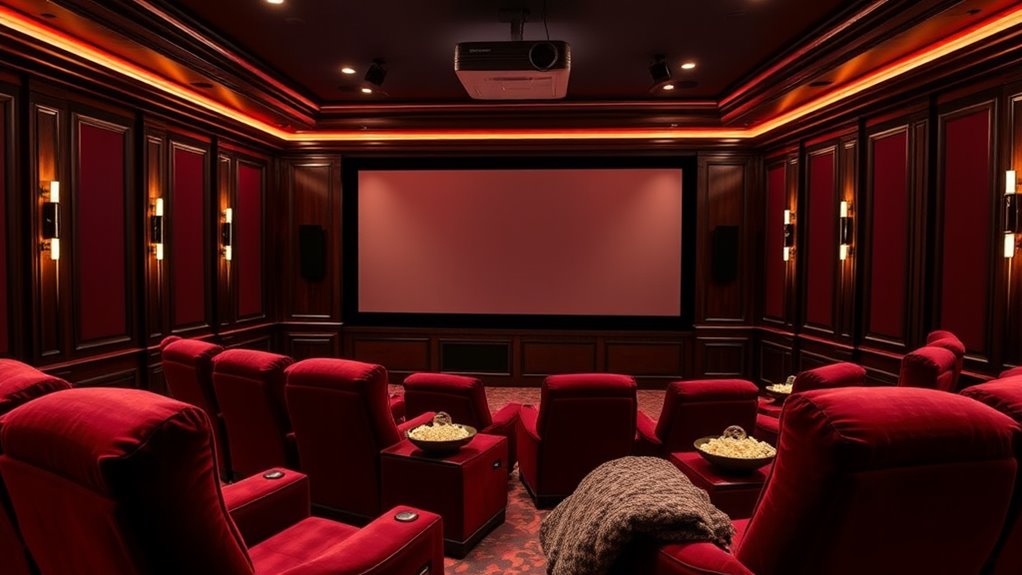
- Choose the Right Color Scheme: Opt for deep, rich colors like navy blue or burgundy to evoke a cozy, immersive space. These hues can absorb light, minimizing distractions.
- Incorporate Thematic Elements: Align your decor with your favorite genres. If you're a sci-fi fan, consider metallic accents and futuristic lighting. For classic films, vintage posters and art deco touches can raise the ambiance.
- Layer Lighting: Use dimmable lights, LED strips, and sconces to create a dynamic lighting setup. This flexibility allows you to adjust the mood based on the film, whether it's a thriller or a romantic comedy.
- Add Soft Textures: Integrate plush seating, thick curtains, and area rugs to create a comfortable, inviting environment. These elements not only improve acoustics but likewise make the space feel more intimate.
Plan for Future Upgrades
As you set up your home theater, it's wise to think ahead and plan for future upgrades. Technology evolves swiftly, and what's state-of-the-art today might be outdated tomorrow. By creating an upgrade timeline, you can guarantee your system remains fresh and at the forefront of innovation.
Start by investing in the right foundation. Opt for a receiver that supports the latest audio formats like Dolby Atmos and DTS:X, and consider a 4K or 8K projector for crisp visuals. When choosing your speakers, think about modular options that allow for easy upgrades, like adding more surround sound speakers or a better subwoofer down the line.
Future proofing technology is crucial. Look for devices that can receive firmware updates, as this can extend their lifespan considerably. Consider smart home integration; systems that work seamlessly with smart assistants can adapt to new technologies without needing a complete overhaul.
Don't forget about cables and connections. Use high-quality HDMI cables that support the latest standards, and verify your setup includes enough ports for additional devices. Leaving space for new tech, like gaming consoles or streaming devices, can save you from tedious rewiring later.
Finally, stay informed about emerging technologies. Join forums or subscribe to tech blogs that focus on home theater advancements. This proactive approach will keep you ahead of the curve, allowing you to enjoy an immersive experience that won't just wow you today, but for years to come.
Frequently Asked Questions
What Budget Should I Set for a Home Theater Setup?
When setting a budget for your home theater setup, start with a budget breakdown. Consider crucial components like the projector, screen, audio system, and seating. Research and do a cost comparison to identify quality options within your price range. You don't have to compromise on innovation; there are plenty of state-of-the-art products available at various price points. Aim for balance between performance and cost to create an impressive viewing experience.
How Do I Choose the Best Projector for My Space?
Choosing a projector is like selecting the perfect paintbrush for your masterpiece. You need to evaluate projector brightness first; it determines how lively your images will be. If your space has ambient light, aim for a brighter projector to keep the colors vivid. Next, think about screen size—balance it with your room dimensions and seating distance. This combination will guarantee your viewing experience transforms into an immersive adventure, enchanting everyone in the room.
Can I Use Existing Furniture for My Home Theater?
Absolutely, you can use existing furniture for your home theater! Start by optimizing your furniture arrangement to create a cozy viewing space. Consider the layout to guarantee everyone has a great sightline to the screen. Then, explore innovative lighting options to improve the atmosphere—think dimmable lights or smart bulbs that sync with your movie. By repurposing what you have, you'll save money and maintain a unique style that reflects your personality.
What Are the Best Materials for Soundproofing a Room?
To soundproof your room effectively, consider using acoustic panels and soundproof curtains. Acoustic panels absorb sound waves, reducing echoes and enhancing clarity, whereas soundproof curtains block external noise and add a stylish touch. You'll want to strategically place the panels on walls and ceilings for maximum impact. By combining these materials, you'll create an innovative environment that minimizes distractions, allowing you to fully immerse yourself in your audio-visual experience.
How Can I Make My Home Theater Kid-Friendly?
Creating a space that's both cozy and exciting can be a challenge. To make your home theater kid-friendly, opt for kid-friendly seating like bean bags or floor cushions that invite relaxation. Plan interactive movie nights where kids can pause for snacks or play games related to the film. Adding a small craft corner for themed activities improves the experience, turning your theater into a hub of creativity and fun for everyone!