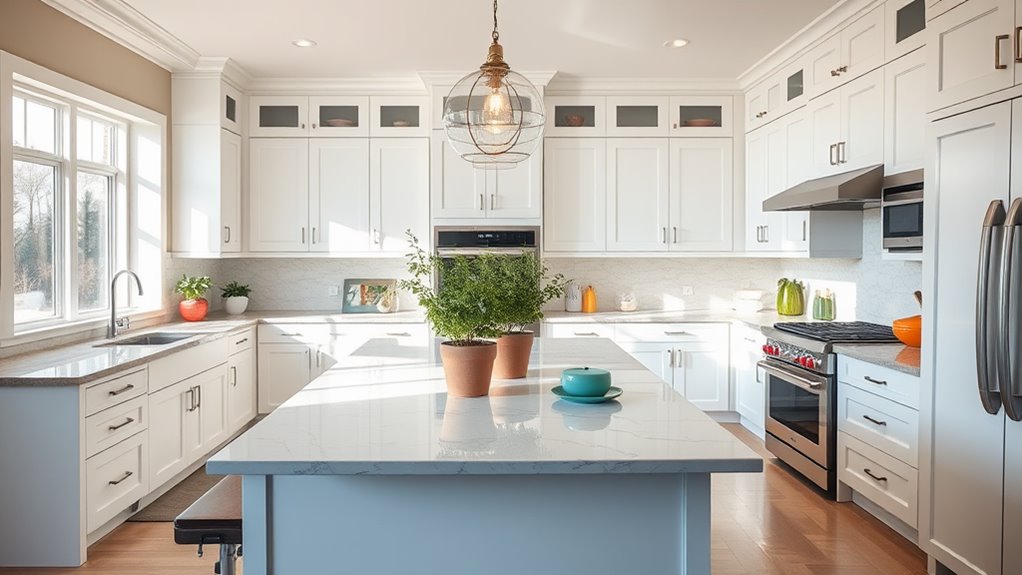
For a successful kitchen renovation, start by establishing a realistic budget that covers all expenses, including appliances and unexpected costs. Plan your layout for efficiency, focusing on the work triangle between your stove, sink, and refrigerator. Choose high-quality materials that offer durability and aesthetic appeal. Prioritize functionality with ample storage solutions and energy-efficient appliances. Don't forget to incorporate layered lighting for both ambiance and task needs, whilst keeping safety a priority throughout. Stay flexible with your timeline to manage delays effectively. There's plenty more to explore to guarantee your kitchen turns out just right.
Establish a Realistic Budget
When planning a kitchen renovation, you'll want to start by establishing a realistic budget. This first step lays the foundation for your project, ensuring you do not end up overspending or cutting corners on key elements. Begin with a thorough budget breakdown, listing all potential costs from appliances to cabinetry and countertops. Don't forget to include labor, permits, and unexpected expenses, as these can quickly add up.
To maximize your budget, consider implementing cost-saving strategies. For instance, you might choose to refinish existing cabinets instead of replacing them entirely. This not merely saves money but also allows for creative expression through paint or new hardware. Another innovative approach is to shop for appliances during sales events or consider slightly used items that can deliver quality at a lower price.
Prioritize your needs versus wants. Focus on crucial upgrades that will improve functionality and efficiency, such as energy-efficient appliances, while keeping luxury items on a wish list for later. Remember, a well-planned budget allows for flexibility; if you find a deal on a must-have feature, you'll have the freedom to make that purchase.
Lastly, track your spending throughout the renovation process. Regularly updating your budget breakdown will help you stay accountable and make any necessary adjustments, ensuring you remain on target. With a clear budget in place, you'll enjoy the renovation experience without the stress of financial surprises.
Plan Your Kitchen Layout
Starting with a thoughtful kitchen layout is crucial for creating a space that's both functional and inviting. When you plan your kitchen layout, you have the opportunity to maximize spatial efficiency and guarantee every inch of your kitchen serves a purpose. Begin by considering various layout styles, such as the U-shape, L-shape, or galley. Each style has its own advantages, depending on your space and cooking habits.
Next, visualize how you'll use the kitchen. If you love to cook, prioritize a layout that allows for easy movement between the stove, sink, and refrigerator. The classic work triangle can help you maintain efficiency by keeping these three key areas in close proximity. For those who entertain frequently, an open concept might be more appealing, allowing guests to mingle as you prepare meals.
Don't forget about storage solutions. Incorporate innovative cabinetry and shelving that utilizes vertical space, making your kitchen feel spacious and organized. Consider adding an island or breakfast bar, which can serve as both extra workspace and a social hub.
Finally, remember to factor in the flow of traffic. Confirm pathways are wide enough for multiple people to move around comfortably. By thoughtfully planning your kitchen layout, you'll create a harmonious environment that improves both functionality and style, making it a joy to cook and entertain in your beautifully renovated kitchen.
Choose Quality Materials
Choosing quality materials is essential for guaranteeing your kitchen renovation stands the test of time. When you invest in durable, high-end products, you not just elevate the aesthetics of your space but additionally improve its functionality and longevity. Opting for luxury finishes, such as granite countertops or custom cabinetry, can transform your kitchen into a sophisticated haven. These materials not only look stunning but likewise resist wear and tear, making them ideal for daily use.
Sustainable materials are another significant consideration in your renovation. By choosing eco-friendly options like bamboo flooring or recycled glass tiles, you're not simply making an aesthetic choice; you're contributing to a healthier planet. Sustainable materials often boast impressive durability, meaning they'll last longer and reduce the need for future renovations. Plus, they often come with unique textures and colors, allowing you to create a kitchen that feels both innovative and inviting.
Don't overlook the importance of hardware and fixtures, either. Investing in high-quality faucets and cabinet handles can greatly impact the overall feel of your kitchen. By selecting materials that are both stylish and built to last, you guarantee that your renovation reflects your commitment to quality and design.
Prioritize Functionality
Functionality should be at the forefront of your kitchen renovation plans. When you're reimagining your space, think about how you cook, entertain, and move around. A seamless kitchen workflow is crucial, and it starts with the layout. Consider the classic work triangle—your stove, sink, and refrigerator should form a triangle that minimizes unnecessary steps. This saves you time and energy, allowing you to focus on what you love most: creating delicious meals.
Incorporating ergonomic design is another key aspect. You want your kitchen to be as comfortable as it is stylish. Think adjustable shelving, pull-out cabinets, and strategically placed appliances to reduce strain on your body. Invest in a counter height that works for you, ensuring you won't find yourself hunched over during chopping vegetables or mixing dough.
Don't forget about storage solutions. Innovative ideas like deep drawers for pots and pans or vertical storage for spices can improve efficiency. You'll want to access your tools and ingredients easily, allowing your creativity to flow without interruption.
Finally, consider the kitchen's flow not just for cooking but for socializing too. If you love entertaining, think about an open layout that encourages interaction. A well-planned kitchen isn't just about aesthetics; it's about how well it serves your needs. By prioritizing functionality, you'll create a space that's not only beautiful but also a joy to use every day.
Consider Lighting Options
When you're renovating your kitchen, lighting plays a vital role in both functionality and ambiance. Think about incorporating layered lighting strategies, balancing task and ambient lighting to create the perfect atmosphere. Don't forget to explore dimming and control options that let you adjust the brightness based on your needs.
Layered Lighting Strategies
How can you create a kitchen that's both inviting and practical? The key lies in perfecting layered lighting strategies. Start with ambient light to set the mood. Opt for soft, warm fixtures that fill the room without overpowering it. Take into account dimmable options, allowing you to adjust brightness for different occasions.
Next, improve your space with accent features. Use spotlights or LED strips to highlight architectural details or art pieces on your walls. This not only adds character but additionally draws attention to the elements you want to showcase. Think about integrating under-cabinet lighting to illuminate countertops, creating an elegant contrast against the ambient glow.
Incorporating multiple light sources is crucial. Mix pendant lights over your island with recessed lighting to create depth and interest. This combination guarantees you have a well-lit space that's functional and stylish.
Don't forget to take into account the color temperature of your bulbs. Warmer tones can evoke a cozy atmosphere, whereas cooler tones may bring a modern edge. By thoughtfully layering your lighting, you'll transform your kitchen into a dynamic space that feels both welcoming and innovative.
Task vs. Ambient Lighting
Balancing task and ambient lighting in your kitchen is essential for both practicality and aesthetics. You want to create a space that's not just functional but also inviting. Task lighting techniques, such as under-cabinet lights or pendant fixtures, focus on areas where you prepare food, ensuring you have ample light for slicing, dicing, and cooking.
On the other hand, ambient lighting benefits include creating a warm atmosphere, perfect for family gatherings or entertaining guests. It fills the room with a soft glow, allowing for a seamless shift from cooking to socializing.
Here's a quick comparison to help you choose the right balance for your kitchen:
| Lighting Type | Key Features |
|---|---|
| Task Lighting | Focused, bright, adjustable |
| Ambient Lighting | Soft, diffused, enveloping |
| Best Uses | Food prep, cooking, reading |
| Examples | Under-cabinet, pendant lights |
Dimming and Control Options
Incorporating dimming and control options into your kitchen lighting can improve both functionality and ambiance. With the rise of smart home technology, you can easily raise your kitchen experience. Dimmers allow you to adjust brightness according to your needs, whether you're prepping a meal or hosting a dinner party.
Consider integrating lighting automation into your renovation. Smart lighting systems can be programmed to change intensity based on the time of day or your specific activities. For instance, you can set warm tones for a cozy dinner or bright light for focused tasks.
Wireless controls, like smartphone apps or voice-activated devices, give you seamless access to your lighting. Envision adjusting the mood with just a command as your hands are busy.
Don't overlook the importance of layering your lighting with dimmers to create depth. Combine this with smart home features for a truly innovative setup.
Investing in these technologies not only improves the aesthetic appeal but simultaneously boosts energy efficiency. So, embrace the future of kitchen lighting and transform your space into a functional yet stylish hub.
Hire Experienced Professionals
When you're planning a kitchen renovation, why take chances with inexperienced contractors? Hiring seasoned professionals can make all the difference in your project's success. You want to guarantee that your vision is executed flawlessly, and that's where contractor qualifications come into play. Look for experts who possess the right licenses and have a solid track record of similar projects. Their experience will provide you with invaluable insights that can enhance your kitchen's design and functionality.
Effective project management is vital during a renovation. An experienced contractor will coordinate all aspects of the process, from sourcing materials to scheduling subcontractors. This attention to detail guarantees that your project stays on track and within budget, minimizing stress and unexpected complications. You can trust that they'll handle any issues that arise with professionalism and efficiency.
Furthermore, seasoned contractors often have established relationships with suppliers and subcontractors, which can lead to better pricing and quicker timelines. They know how to navigate the challenges that come with renovations, such as permits and inspections, guaranteeing compliance with local regulations from the start.
Investing in experienced professionals isn't solely about getting the job done; it's about transforming your kitchen into a space that reflects your innovation and style. When you hire the right team, you can focus on your vision as they bring it to life, making your kitchen renovation a rewarding experience.
Stay Open to Design Ideas
A kitchen renovation is a perfect opportunity to explore fresh design ideas and innovative concepts. You shouldn't shy away from thinking beyond the conventional. Embrace creative brainstorming sessions where you can jot down everything that excites you—colors, textures, layouts, and materials. This is your chance to let your imagination run wild and visualize your dream kitchen.
Dive into design inspiration from various sources. Browse through magazines, websites, and social media platforms dedicated to interior design. Pinterest can be a treasure trove for unique ideas, allowing you to compile a vision board that reflects your style. Pay attention to the latest trends, but don't feel obligated to follow them. Instead, adapt and personalize those ideas to fit your vision.
Consider unconventional elements that can make your kitchen stand out. Think about mixing materials, like pairing wood with metal or adding bold tile patterns. Be open to merging styles—perhaps a rustic farmhouse vibe with sleek modern finishes. This is your chance to create a space that feels truly yours, so let your creativity shine.
Focus on Storage Solutions
Maximize your kitchen's potential by focusing on smart storage solutions that keep your space organized and functional. In today's innovative kitchen designs, efficient storage is a transformative element, enabling you to make the most of every square inch. Consider using vertical solutions to utilize wall space, such as open shelving, hanging pot racks, or pegboards. These not just free up counter space but additionally add a contemporary touch to your kitchen.
Think about incorporating pull-out cabinets or drawers in your lower cabinets. These smart storage options allow you to access items easily without digging through clutter. You could likewise install lazy Susans in corner cabinets to make use of those often-overlooked spaces.
Don't forget about the areas above your cabinets. It's an often-neglected space that can be transformed into additional storage for less frequently used items or decorative displays. By using clear bins or stylish baskets, you can keep everything organized as well as adding a personalized flair.
Finally, consider integrating multifunctional furniture, like an island with built-in storage or a dining table with drawers. This innovation maximizes your kitchen's functionality as well as keeping it sleek and stylish.
With these smart storage solutions, you'll create a kitchen that's not just visually appealing but also highly efficient, making cooking and entertaining a breeze. Embrace these strategies, and watch how your kitchen transforms into a well-organized haven!
Incorporate Energy-Efficient Appliances
Upgrading your kitchen storage sets the stage for another important aspect of renovation: incorporating energy-efficient appliances. These appliances not just modernize your kitchen but also greatly reduce your energy consumption, making them a smart investment for the eco-conscious homeowner. With a variety of energy-efficient options available, you can enjoy high performance as you minimize your carbon footprint.
When choosing appliances, consider the ENERGY STAR® label, which indicates superior energy efficiency. Many models qualify for appliance rebates, allowing you to save even more money. Here's a quick comparison of popular energy-efficient appliances to help you make informed choices:
| Appliance Type | Energy Efficient Options | Potential Appliance Rebates |
|---|---|---|
| Refrigerator | French door, side-by-side models | Up to $200 |
| Dishwasher | Compact or smart features | Up to $100 |
| Oven/Stove | Induction or convection options | Up to $150 |
| Washing Machine | Front-loading, high-efficiency | Up to $75 |
| Microwave | Over-the-range, sensor cooking | Up to $50 |
Incorporating these options not only improves the functionality of your kitchen but also aligns with sustainable living practices. You'll be amazed at how these innovative appliances can enhance your cooking experience as you save money on utility bills. Embrace the opportunity to modernize your space and contribute to a greener planet!
Keep Safety in Mind
When planning your kitchen renovation, keeping safety in mind is fundamental for both functionality and peace of mind. A well-designed kitchen should not only look great but also protect you from potential renovation hazards. Start by guaranteeing that your workspace is free from clutter. This minimizes the risk of accidents, especially when you're handling sharp tools or heavy materials.
Next, pay attention to electrical safety. If you're adding new appliances or changing the layout, hire a qualified electrician to manage the wiring. Overloading circuits can lead to serious hazards, so it's imperative to follow safety codes. In addition, consider the placement of outlets; they should be easily accessible and strategically located to prevent tangled cords that can create tripping risks.
Don't overlook the importance of ventilation. Renovations often involve materials that release fumes, so proper airflow is critical for kitchen safety. Install a range hood or make sure windows can open to keep air quality high.
Finally, wear appropriate safety gear throughout the renovation. Hard hats, gloves, and safety goggles can protect you from common injuries. Encourage anyone assisting you to do the same. Remember, maintaining kitchen safety isn't merely about avoiding injuries; it's about creating an environment where you can innovate without worry. By prioritizing safety during your kitchen renovation, you'll guarantee a smoother process and a stunning end result that you can enjoy for years to come.
Allow for Flexibility in Timeline
When planning your kitchen renovation, it's vital to anticipate delays and be ready to adjust your timeline. Prioritizing important tasks first can help keep the project on track, even when unexpected issues arise. Flexibility will not just reduce stress but additionally lead to a more successful renovation experience.
Anticipate Delays and Adjust
Anticipating potential delays during your kitchen renovation can save you stress down the line. As you're excited about the innovative changes ahead, it's essential to recognize that renovations often don't go as planned. Effective project management means comprehending that unexpected challenges can arise—whether it's delivery issues, permit delays, or unforeseen structural problems.
To keep your renovation on track, implement contingency planning from the get-go. This means building a buffer into your timeline. If a project is estimated to take four weeks, consider extending it to five or six. This flexibility allows you to handle any surprises without derailing your entire plan.
Moreover, stay in close communication with your contractors. Regular updates can help you navigate any potential hiccups before they become major setbacks. By embracing this proactive approach, you won't just survive delays; you'll thrive through them, ensuring your kitchen transforms into the innovative space you've envisioned. Remember, adaptability is key. The more prepared you are for the unexpected, the smoother your renovation process will be. So, embrace the experience and keep your eyes on the prize—a stunning new kitchen!
Prioritize Essential Tasks First
Focusing on fundamental tasks first is crucial for a successful kitchen renovation. By prioritizing critical tasks, you set a strong foundation for your project, ensuring everything else follows smoothly. Remember, flexibility in your timeline is key, as delays can occur. Here's how you can effectively manage your tasks:
- Identify Key Areas: Decide which parts of the kitchen need immediate attention, like plumbing or electrical work.
- Gather Necessary Tools: Make sure you have all the important tools on hand before you start. This can prevent interruptions.
- Delegate Tasks: Don't hesitate to assign specific jobs to team members or contractors to improve efficiency.
- Set Clear Milestones: Break your renovation into stages, so you can monitor progress without feeling overwhelmed.
- Allow for Adjustments: Stay adaptable; if a task takes longer than expected, be prepared to shift your priorities.
Frequently Asked Questions
How Do I Choose the Right Contractor for My Kitchen Renovation?
Selecting the right contractor for your kitchen renovation is essential. Start by evaluating contractor qualifications—check their licenses, insurance, and client reviews. You'll want someone experienced who can handle innovative designs. Discuss your renovation timeline upfront to guarantee they can meet your schedule. Ask about their process and communication style, too. A good contractor should be transparent and responsive, making your renovation experience smoother and more enjoyable.
What Permits Do I Need for a Kitchen Renovation?
When you're planning your kitchen renovation, you'll need to check what permits you require. Typically, you'll need permits for structural changes, electrical work, and plumbing. Since you're focusing on innovative kitchen layouts and design trends, make certain your plans comply with local regulations. Contact your local building department to get the specifics, as each area has different requirements. Don't forget to keep your vision aligned with the necessary approvals!
How Can I Minimize Disruption During the Renovation Process?
You wouldn't want your kitchen renovation to feel like a chaotic circus, right? To keep things breezy, set up a temporary kitchen in a nearby space. This way, you can whip up meals without a hitch. Additionally, clearly define your renovation timeline with your contractor to manage expectations. Staying organized and having a plan will help you glide through the process, ensuring minimal disruption as you're enthusiastically anticipating your beautiful new kitchen.
What Should I Do if I Encounter Unexpected Issues?
If you encounter unexpected issues during your renovation, stay calm and assess the situation. You might need to make budget adjustments to cover unforeseen costs, like repairs or upgrades. Keep an open line of communication with your contractor to address material delays and find innovative solutions. Flexibility is key; consider alternative materials or designs that fit your vision as you stay on track. Embrace these challenges as opportunities to improve your kitchen's functionality and style.
How Long Does a Typical Kitchen Renovation Take?
Did you know that 41% of kitchen renovations take longer than expected? Your typical kitchen renovation can span anywhere from a few weeks to several months, depending on various timeline factors. Important renovation stages, like planning, demolition, and installation, all play a vital role in determining the overall duration. To keep things on track, stay organized and communicate clearly with your contractors. Embrace the process, and soon you'll enjoy your innovative dream kitchen!