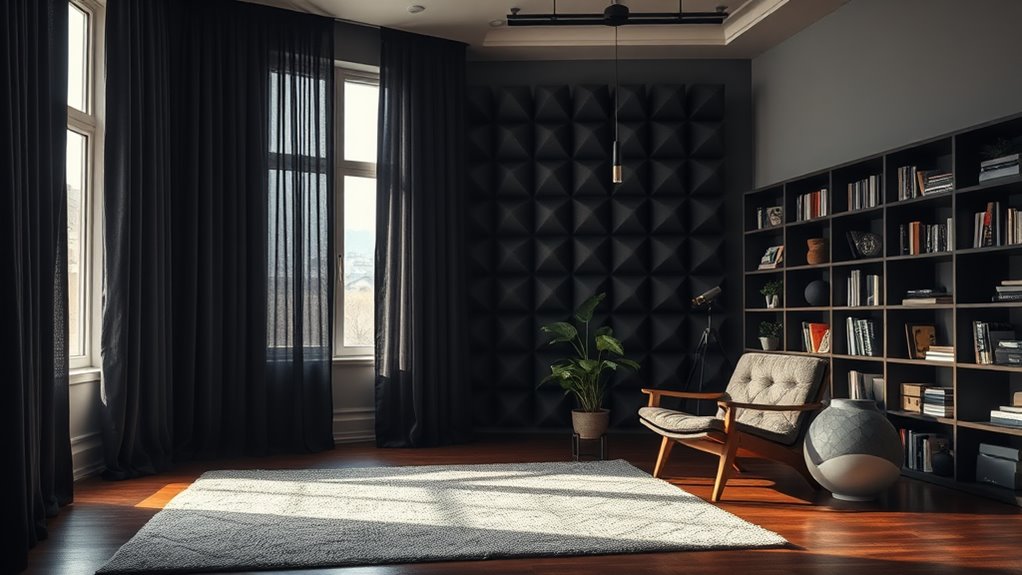
Soundproofing a room is easier than you think! Start with heavy curtains to block outside noise and seal any gaps around windows and doors with acoustical caulk. Adding soundproofing panels to your walls can likewise absorb unwanted sound, whereas thick rugs or carpets will help minimize echoes. Don't forget to rearrange your furniture by placing heavy items against shared walls. These adjustments can transform your space into a quieter haven. If you want more tips and tricks to improve your soundproofing skills, there's plenty more to explore!
Use Heavy Curtains
One effective way to improve your room's tranquility is by using heavy curtains. These aren't just any curtains; they're designed particularly for sound absorption, helping to minimize outside noise and create a serene atmosphere. By choosing thicker, denser materials, you'll effectively muffle sounds that might otherwise disrupt your peace. Picture enjoying your favorite activities without the distraction of honking cars or loud neighbors—heavy curtains make that possible.
When selecting heavy curtains, consider their aesthetic appeal as well. You don't have to sacrifice style for functionality. Opt for colors and patterns that complement your room's design as you still provide the sound-dampening qualities you need. Rich fabrics, like velvet or thick cotton blends, offer both elegance and effectiveness. The right choice can improve your décor and contribute to a cozy, inviting environment.
To maximize the benefits, hang your curtains close to the ceiling and let them reach the floor. This not only improves their sound absorption capabilities but creates an illusion of higher ceilings, making your space feel larger. Layering your heavy curtains with lighter sheers can likewise add depth to your window treatment while maintaining that tranquil ambiance.
Incorporating heavy curtains into your room's design is an innovative, stylish solution for soundproofing. It allows you to curate a sanctuary that reflects your taste and keeps unwanted noise at bay. So go ahead, transform your space into a peaceful haven with a touch of elegance!
Seal Gaps and Cracks
To effectively soundproof your room, sealing gaps and cracks is vital. Even the tiniest openings can allow noise to sneak in, undermining your efforts. Start by inspecting the perimeter of your windows and doors. You'll often find small gaps where sound can travel freely. A simple caulk application can work wonders here. Choose a high-quality acoustical caulk designed to block sound transmission. Apply it generously along the edges, ensuring you fill every nook and cranny. This innovative approach not only improves sound insulation but additionally boosts your room's energy efficiency.
Next, don't overlook your doors. Installing door sweeps is a smart move that helps seal the space between the bottom of the door and the floor. This gap is often a major culprit in sound leakage, so adding a durable door sweep can greatly reduce noise intrusion. Look for options that are easy to install and fit snugly against your flooring.
You might as well want to check baseboards and electrical outlets—these can harbor hidden gaps too. For outlets, consider using acoustic sealant to fill in any voids.
Add Soundproofing Panels
Adding soundproofing panels can greatly improve your room's acoustic quality. These innovative acoustic panels work wonders in reducing noise and enhancing sound absorption, making your space feel more serene and enjoyable. Whether you're creating a home studio, a cozy reading nook, or a lively entertainment area, incorporating these panels can transform your environment.
When selecting acoustic panels, consider materials designed particularly for sound absorption. Foam panels, fabric-wrapped boards, and even wood acoustic panels are popular choices that not only look stylish but also effectively minimize sound reflection. You can easily mount them on walls or ceilings, customizing the layout to suit your aesthetic preferences and functional needs.
Placement is key! Focus on areas where sound bounces, like opposite walls or corners of the room. By strategically positioning the panels, you can maximize their effectiveness and create a harmonious atmosphere. Don't shy away from experimenting with different shapes and colors—this is your chance to release creativity while improving sound quality.
Moreover, think about the thickness of the panels. Thicker options tend to offer better sound absorption, so if you're serious about reducing noise, invest in panels that provide the best performance.
Incorporating acoustic panels into your space is a straightforward solution that yields impressive results. With minimal effort, you'll find yourself enjoying a quieter, more inviting room, allowing you to focus on what truly matters—whether it's work, relaxation, or simply enjoying your favorite tunes.
Use Rugs and Carpets
Even though soundproofing panels are an excellent choice for improving acoustics, using rugs and carpets can likewise make a significant difference in reducing noise within a room. These soft surfaces absorb sound waves, minimizing echoes and creating a more serene environment. Here's how you can effectively use rugs and carpets for ideal sound absorption:
- Choose Thick Materials: Opt for plush, thick rugs that can trap sound better than thinner options. Wool or high-pile carpets are ideal for this purpose.
- Incorporate Acoustic Underlay: Adding an acoustic underlay beneath your rugs improves sound absorption even further. This layer acts as a buffer against noise transmission, making your floor quieter.
- Cover Large Areas: The more surface area you cover, the better the soundproofing effect. Consider using large area rugs instead of smaller ones to maximize impact.
- Layer Strategically: If possible, layer rugs for added sound absorption. Combining different textures and materials can create a visually appealing look as you effectively reduce noise.
Rearrange Furniture Strategically
Rugs and carpets play a significant role in soundproofing, but the placement of your furniture can similarly have a major impact on noise reduction. By strategically rearranging your furniture layout, you can improve noise absorption and create a more peaceful environment. Start with large, heavy pieces like sofas or bookshelves. Position them against shared walls to create a barrier that helps absorb sound from neighboring rooms.
Consider the arrangement of your seating. By clustering chairs and couches in a way that minimizes open space, you can reduce echo and prevent sound from bouncing around. In addition, use soft materials for upholstery, which can further improve noise absorption. If you've got a coffee table, choose one with a thick, soft top or consider placing a decorative fabric over it to soften its impact on noise.
Don't underestimate the influence of decor! Wall art, curtains, and fabric wall hangings can all contribute to soundproofing. When you think about your furniture layout, consider adding bookshelves filled with books or decorative items. They not only provide style but also add mass that helps absorb sound.
Finally, keep pathways clear. A clutter-free layout allows sound to move more freely, which can lead to unwanted noise. By intentionally thinking about your furniture arrangement, you can turn your room into a sanctuary of sound, making it a more enjoyable space for relaxation or creativity. Embrace these innovative strategies, and watch how your environment transforms!
Frequently Asked Questions
How Effective Are DIY Soundproofing Methods Compared to Professional Services?
When comparing DIY techniques to professional effectiveness, you'll find that both have their merits. DIY methods can be cost-effective and innovative, allowing you to customize your approach, but they might not always match the precision of professional services. Professionals use advanced materials and techniques that typically yield superior results. If you're looking for a quick fix, DIY might work, but for lasting silence, professional help often makes a significant difference.
Can Plants Help With Sound Absorption in a Room?
In terms of sound absorption, you might be surprised to learn that indoor greenery can be a transformative element. Sound absorbing plants, like peace lilies and rubber trees, not just beautify your space but additionally help dampen noise. They're like nature's little sound barriers! By incorporating these plants, you create a more tranquil environment. So, don't underestimate the strength of greenery—it might just be the innovative solution you've been looking for.
What Materials Are Best for Soundproofing Walls?
When you're looking to soundproof your walls, consider using acoustic panels and various insulation types. Acoustic panels absorb sound waves effectively, reducing echo and noise transmission. For insulation, materials like fiberglass and foam are great choices, as they offer excellent sound-dampening qualities. By combining these innovative materials, you can create a quieter, more serene environment in your space. Don't underestimate how much of a difference the right choices can make!
How Much Does Professional Soundproofing Installation Cost?
When you're considering professional soundproofing installation, you'll find soundproofing costs can vary widely. On average, you might spend between $1,000 to $3,000, depending on the size of the area and the materials used. Installation options range from simple acoustic panels to more complex wall modifications. Investing in a professional can guarantee optimal outcomes, transforming your space into a quiet haven. Don't overlook the long-term benefits of a peaceful environment!
Are There Soundproofing Solutions for Windows?
Did you know that up to 50% of outside noise can enter through windows? If you're looking for soundproofing solutions, consider using acoustic curtains that can absorb sound waves effectively. Pair them with high-quality window seals to minimize gaps where noise creeps in. Together, these innovations can create a much quieter environment, allowing you to focus better and enjoy peace at home. Don't underestimate the impact of these simple changes!