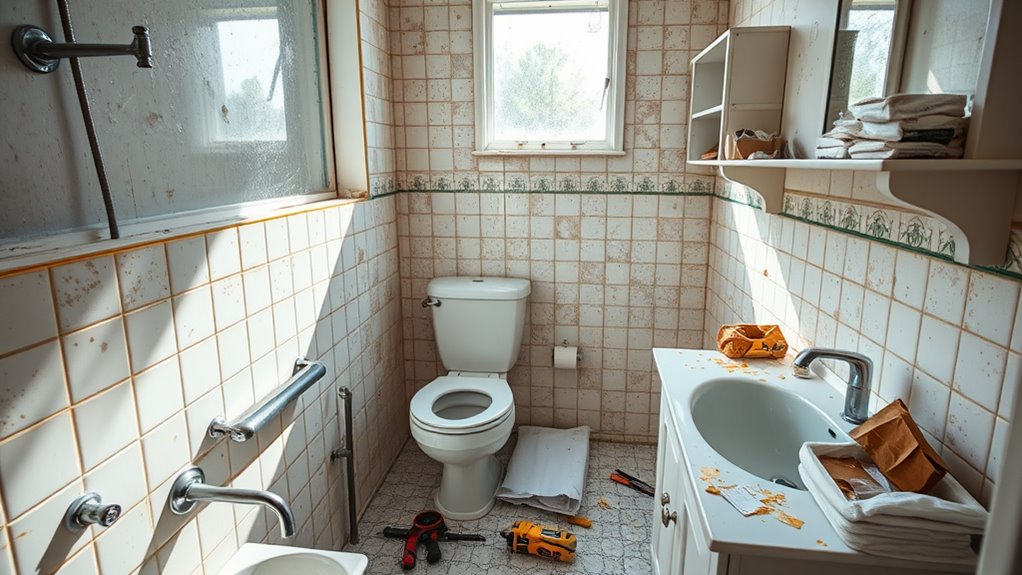
When remodeling your bathroom, avoid common mistakes that can lead to expensive setbacks. Don't skip the planning phase; take the time to visualize and organize each step. Stick to a realistic budget, accounting for potential unexpected costs. Make sure to choose compatible, water-resistant materials that fit your design. Don't underestimate time requirements, as delays can disrupt your timeline. Additionally, be careful not to overpersonalize your design, which might affect resale value. Focus on functional layouts and adequate storage solutions. For a more successful remodel, keep these considerations in mind as you explore your options.
Skipping the Planning Phase
Skipping the planning phase can lead to costly mistakes in your bathroom remodel. You might think plunging right into the exciting parts—like picking out tiles or fixtures—will save you time, but without solid planning strategies, you could end up with a design that doesn't flow or meet your needs. Taking the time to map out your vision can make all the difference.
Start by establishing clear project timelines. Break down your remodel into manageable phases, like design, demolition, and installation. This helps you stay organized and guarantees that you allocate enough time for each step. You don't want to rush the installation process only to realize you've made design compromises due to hasty decisions.
Another crucial aspect of planning is considering functionality. Think about how you use your bathroom daily. This insight will guide your choices—from the placement of fixtures to the type of storage you need. Innovative ideas often stem from comprehending your lifestyle.
Don't overlook the importance of researching trends and materials. Although you may be keen to implement the latest designs, verify they align with your vision and practical needs. Embrace technology; using design software can help visualize your space effectively.
Ignoring Budget Constraints
When remodeling your bathroom, ignoring budget constraints can lead to financial stress and unfinished projects. You need to set realistic budget limits and always factor in unexpected costs that may arise. Prioritizing vital upgrades will help guarantee you stay on track and achieve the bathroom of your dreams without breaking the bank.
Set Realistic Budget Limits
Budgeting for a bathroom remodel can often feel overwhelming, yet it's essential for a successful project. You need to set realistic budget limits that reflect both your vision and financial capabilities. Start by determining what you can afford without sacrificing quality or innovation. This means doing some thorough budget tracking from the get-go. Break down your costs into categories, like materials, labor, and unexpected expenses, to get a clear picture of where your money will go.
Don't forget to allow for some financial flexibility within your budget. This means leaving a little wiggle room for those upgraded fixtures or eco-friendly materials you didn't initially consider. By doing this, you keep your project innovative and aligned with your style without breaking the bank.
Factor in Unexpected Costs
Even with a well-planned budget, unexpected costs can arise during a bathroom remodel. You might encounter unexpected expenses like plumbing issues, outdated electrical wiring, or even hidden mold. These surprises can quickly derail your carefully crafted budget, leaving you scrambling for solutions.
To prevent this from happening, it's essential to factor in budget contingencies. Experts recommend setting aside an additional 10-20% of your total budget to accommodate these unforeseen costs. This cushion not only provides you peace of mind but also allows you to explore innovative solutions as challenges arise, rather than cutting corners or compromising your vision.
When you allocate funds for unexpected expenses, you empower yourself to make informed choices. If a design element you love needs adjustments because of structural issues, you won't feel pressured to abandon your dreams. Instead, you can adapt and innovate, ensuring your remodeled bathroom reflects your style and meets functional needs.
In the end, embracing the possibility of unexpected costs will lead to a smoother renovation process. By planning ahead and maintaining flexibility, you can achieve a stunning bathroom while staying within your overall budget.
Prioritize Essential Upgrades
Even though it's tempting to focus solely on aesthetic upgrades during your bathroom remodel, prioritizing vital improvements can make a significant difference in both functionality and long-term value. Start by evaluating your current layout. An efficient layout not only improves usability but can as well transform the overall feel of your space. Consider relocating fixtures or adjusting the placement of elements like the toilet, sink, and shower for maximum convenience.
Investing in modern fixtures is another key upgrade. Not only do they uplift the style of your bathroom, but they additionally improve water efficiency and reduce utility bills. Look for faucets and showerheads that combine form and function, ensuring you're not just creating a beautiful space but equally a sustainable one.
Moreover, don't underestimate the value of proper lighting. Well-placed, modern lighting can dramatically alter the ambiance while making daily routines more enjoyable. By focusing on these key upgrades, you won't just create a visually appealing bathroom; you'll similarly improve its functionality and longevity. Remember, it's all about balancing innovation with practicality—your dream bathroom is within reach!
Underestimating Time Requirements
When plunging into a bathroom remodel, it's easy to get swept up in excitement and overlook the time it'll take to complete the project. This can lead to frustration and delays, making effective time management crucial. You need a realistic project timeline that accounts for every phase, from design to installation.
Here's what to keep in mind as you plan:
- Design Phase: Don't underestimate how long it takes to finalize your vision. This can take weeks, especially if you're customizing.
- Ordering Materials: Shipping delays can throw your timeline off. Always order materials well in advance.
- Demolition: Depending on your current layout, demolition can take longer than expected, especially with plumbing or electrical work involved.
- Installation: Whether it's tile, fixtures, or cabinetry, each step requires attention to detail and time. Rushing can lead to mistakes.
- Final Touches: Don't forget about the finishing touches, like caulking and painting, which can add days to your timeline if neglected.
Neglecting Ventilation Needs
Proper ventilation is a vital aspect of any bathroom remodel that often gets overlooked. You might be tempted to focus solely on aesthetics or functionality, but neglecting your bathroom's ventilation needs can lead to considerable long-term issues. Poor air quality can promote mold growth, which not only damages your renovation but likewise poses health risks to you and your family.
When planning your remodel, consider the various ventilation types available. Exhaust fans are a popular choice and can effectively remove moisture and odors from the space. If you're aiming for a more innovative approach, think about incorporating a heat recovery ventilator (HRV) that not only provides fresh air but also maintains temperature control. This can improve energy efficiency, making your bathroom both comfortable and sustainable.
Additionally, verify your ventilation system is appropriately sized for your bathroom's dimensions. An underpowered fan won't adequately remove moisture, whereas an oversized one might create excessive noise and energy consumption.
It's also wise to position your ventilation strategically. For instance, placing an exhaust fan near the shower can considerably improve moisture removal right where it's needed most.
Choosing Incompatible Materials
When remodeling your bathroom, it's essential to choose materials that work well together. Consider how durable each option is, in addition to how they'll look together and withstand moisture. Ignoring these factors can lead to a space that not just looks mismatched but likewise doesn't hold up over time.
Material Durability Considerations
Often, homeowners underestimate the importance of material compatibility in bathroom remodeling. Choosing incompatible materials can lead to unexpected issues that compromise both aesthetics and functionality. To guarantee your bathroom stands the test of time, consider these material selection strategies for long-term performance:
- Water-resistant options: Select tiles and surfaces that can withstand moisture.
- Temperature resilience: Choose materials that won't warp or crack with temperature fluctuations.
- Non-slip finishes: Prioritize safety with materials that provide traction, especially on flooring.
- Mildew-resistant treatments: Opt for surfaces that deter mold growth, maintaining a clean environment.
- Complementary compositions: Confirm that structural elements, like cabinets and countertops, are compatible for durability.
Aesthetic Harmony Importance
A bathroom's visual appeal can dramatically impact your overall enjoyment of the space, so it's vital to take into account aesthetic harmony when selecting materials. You want to create a cohesive look that resonates with your chosen design themes. Mixing incompatible materials can disrupt the flow and make your bathroom feel disjointed.
Start by establishing a consistent color palette. This will guide your choices for tiles, fixtures, and accessories. For instance, pairing sleek, modern fixtures with rustic wooden accents might clash, leaving your design feeling chaotic. Instead, consider materials that complement each other—like matte black fixtures with white subway tiles for a contemporary vibe, or soft pastels with natural stone for a tranquil retreat.
Additionally, think about texture. Combining glossy surfaces with rough finishes can create an unbalanced feel. Aim for materials that not merely look good together but also improve the overall atmosphere you're trying to achieve. Remember, the goal is to evoke a sense of serenity and style. By carefully selecting compatible materials, you'll raise your bathroom into a harmonious sanctuary that reflects your unique vision and enriches your daily experience.
Moisture Resistance Requirements
Reflecting on the unique challenges of a bathroom environment, moisture resistance is crucial when selecting materials. Choosing incompatible materials can lead to disastrous outcomes, such as mold growth or structural damage. To avoid these pitfalls, focus on innovative options that incorporate moisture barriers and waterproof finishes.
Here are some materials to reflect on:
- Porcelain tiles: They're incredibly durable and resistant to moisture.
- Acrylic shower surrounds: These create a seamless moisture barrier.
- Water-resistant drywall: This is crucial for areas prone to humidity.
- Vinyl flooring: Its waterproof nature makes it perfect for bathrooms.
- Silicone caulk: This seals gaps effectively, preventing moisture intrusion.
Overlooking Lighting Options
When remodeling your bathroom, don't underestimate the strength of lighting—it's an essential element that can transform the space. Effective lighting not only improves aesthetics but also enhances functionality. You'll want to take into account both ambient lighting and fixture selection to create a cohesive and inviting atmosphere.
To help you navigate your lighting choices, here's a quick reference table:
| Lighting Type | Purpose |
|---|---|
| Ambient Lighting | Provides overall illumination |
| Task Lighting | Aids in specific activities |
| Accent Lighting | Highlights features or decor |
| Natural Lighting | Utilizes windows for daylight |
Ambient lighting serves as the foundation of your bathroom's illumination, ensuring the area is bright enough for daily activities. Look for fixtures that blend style with efficiency—think sleek LED options or elegant pendant lights.
Task lighting is essential near mirrors and vanities, so choose fixtures that eliminate shadows and offer a true reflection of your features. Think about sconces or backlit mirrors as innovative solutions to improve this area.
Accent lighting can add a touch of drama, drawing attention to design elements like artwork or architectural details. A well-placed LED strip or a spotlight can make all the difference.
Lastly, don't overlook the influence of natural light. If your bathroom allows, strategically placed windows or skylights can improve the ambiance and reduce energy costs. Prioritize your lighting strategy, and you'll create a bathroom that's both functional and beautifully inviting.
Failing to Hire Professionals
When remodeling your bathroom, it's essential to recognize the importance of hiring professionals. Attempting DIY projects might seem like a cost-saving measure, but the risks can lead to costly mistakes and safety hazards. Trusting experts guarantees your renovation is done right and meets all necessary standards.
Importance of Expertise
Failing to hire professionals can lead to costly mistakes and headaches during your bathroom remodel. You might think you can save money by going the DIY route, but without the right expertise, you're setting yourself up for a world of trouble. Engaging in expert consultation and leveraging design expertise can transform your vision into a stunning reality.
Consider the benefits of hiring professionals:
- Accurate measurements that prevent costly adjustments later.
- Innovative design solutions that you might never have considered.
- Quality materials sourced from trusted suppliers, ensuring durability.
- Compliance with local codes, avoiding potential fines and headaches.
- Efficient project management that keeps your renovation on schedule.
Risks of DIY Projects
Taking on a DIY bathroom remodel might seem like an exciting challenge, but the risks involved can quickly overshadow the potential rewards. You might envision a stunning transformation, yet without proper project planning and expertise, you could find yourself facing costly mistakes. From plumbing disasters to electrical issues, the lack of professional knowledge can lead to unsafe conditions that jeopardize your DIY safety.
Moreover, many underestimate the time commitment required for a bathroom remodel. What starts as a weekend project can spiral into weeks of delays. If you're juggling work and personal responsibilities, this can lead to frustration and unfinished projects. Not to mention, you may overlook essential permits or codes, resulting in fines or further complications.
Hiring professionals guarantees that your vision is realized with precision and expertise. They bring experience to the table, maneuvering potential pitfalls and providing innovative solutions that you might not have considered. In the end, although DIY projects can be appealing, the risks often outweigh the temporary thrill. Prioritizing safety and efficiency by hiring skilled professionals will save you time, money, and stress in the long run.
Disregarding Plumbing Considerations
Ignoring plumbing factors can lead to costly mistakes in your bathroom remodel. When you embark on this project, make sure you're not just thinking about aesthetics; your plumbing layout is fundamental for functionality and efficiency. Failing to address plumbing can cause headaches down the line, so here are some key aspects to reflect on:
- Plumbing permits: Confirm you've secured the necessary permits before you start. This not only keeps you compliant with local regulations but also prevents future complications.
- Pipe placement: Reflect on where your pipes will run. An innovative layout can save space and make your bathroom feel more open.
- Water pressure: Evaluate your water supply to avoid issues like low pressure or leaks after installation.
- Drainage: Proper drainage is crucial. If your plumbing isn't set up correctly, you'll face slow drains and potential water damage.
- Accessibility: Design your plumbing with ease of access in mind. This will make future repairs and maintenance much easier.
Forgetting About Storage Solutions
During ensuring your plumbing is up to par, it's easy to overlook storage solutions in your bathroom remodel. Nevertheless, neglecting this vital aspect can lead to a cluttered and chaotic space. You want your bathroom to be not merely functional but also a serene retreat. That's where creative storage solutions come into play.
Consider the fantastic potential of maximizing vertical space. Instead of solely relying on traditional cabinets, think about installing open shelves or wall-mounted organizers. These can not only hold your necessities but additionally serve as stylish decor—showcasing chic baskets or decorative jars while keeping everything easily accessible.
Another innovative idea is to incorporate multifunctional furniture. A vanity with built-in drawers or a storage bench can transform your space. You'll gain extra storage while maintaining a sleek appearance. Don't forget about underutilized areas; installing racks or hooks behind the door can provide ample storage without sacrificing style.
If you're feeling particularly daring, consider hidden storage options. Floating cabinets or recessed shelves can keep your bathroom looking clean and uncluttered while providing the functionality you need.
Making Layout Changes Last Minute
Last-minute layout changes can derail even the best bathroom remodels, leading to unexpected costs and delays. You might think a quick tweak here or there will improve the overall design, but these alterations can disrupt your carefully planned layout flow and compromise space efficiency. Instead of achieving that innovative look you desire, you could end up with a chaotic layout that feels cramped and uninviting.
Before you decide to make any last-minute adjustments, consider these potential pitfalls:
- Increased labor costs: Every change requires additional work, pushing your budget beyond what you planned.
- Material delays: Your chosen materials might not fit the new layout, leading to sourcing issues and longer timelines.
- Design inconsistencies: A sudden shift can create mismatches in style, disrupting the visual harmony of your bathroom.
- Plumbing complications: Moving fixtures like sinks or toilets can be a costly nightmare if not planned properly.
- Wasted space: Altering the layout could lead to inefficient use of space, making your bathroom feel smaller instead of larger.
To guarantee your remodel stays on track, stick to the original plan you've crafted. If you feel a change is absolutely necessary, take the time to analyze its impact on layout flow and space efficiency. The goal is to improve your bathroom's functionality without sacrificing the innovative design you envisioned.
Overpersonalizing Design Choices
Adhering to your original layout is vital for a successful remodel; overpersonalizing your design choices can lead to similar complications. Although it's tempting to infuse your personal taste into every corner of your bathroom, going too far can make it difficult to sell your home or enjoy a cohesive look. Instead, aim for a balanced approach that respects contemporary design trends whilst reflecting your style.
Here's a quick table to help you gauge when to hold back on personalization:
| Design Element | Personalize Sparingly | Embrace Design Trends |
|---|---|---|
| Color Palette | Use bold colors wisely | Stick to neutrals with pops of color |
| Fixtures | Unique shapes are fun | Opt for timeless designs |
| Accessories | Showcase personality | Select functional decor |
By keeping a mindful eye on current trends, you guarantee your bathroom looks fresh but still feels like home. For example, although a bright pink sink might feel like a personal statement today, it could limit your appeal tomorrow. Instead, choose fixtures that align with popular aesthetics, then add personal touches through art or textiles. This way, you create a space that feels innovative yet universally inviting.
In the end, overpersonalizing can overshadow your bathroom's functionality. Aim for a blend of your unique style with elements that resonate with broader design preferences, resulting in an elegant, timeless space.
Frequently Asked Questions
What Are the Latest Trends in Bathroom Remodeling?
You won't believe how bathroom remodeling is skyrocketing into the future! Smart technology's taking over, turning your space into a luxurious oasis with voice-activated faucets and self-cleaning toilets. Color schemes are bold and daring, with deep blues and lively greens making waves. You'll create a sanctuary that reflects your unique style as you embrace innovation. So, immerse yourself in these trends and transform your bathroom into the envy of everyone who steps inside!
How Can I Increase My Bathroom's Resale Value?
To increase your bathroom's resale value, focus on key bathroom upgrades that appeal to buyers. Consider modern fixtures, stylish tiles, and energy-efficient lighting. Open up the space by adding a double vanity or a walk-in shower for an innovative touch. Don't underestimate the strength of fresh paint and good lighting. These resale tips will help you attract potential buyers and make your bathroom a standout feature in your home.
What Eco-Friendly Options Are Available for Bathroom Remodels?
When you're looking to remodel your bathroom with eco-friendly options, consider using sustainable materials like bamboo or recycled tiles. These not just look great but additionally help the environment. Don't forget to install water-saving fixtures, such as low-flow toilets and showerheads, which can drastically reduce water usage without sacrificing performance. Incorporating these innovative choices not just improves your bathroom's style but additionally promotes a greener lifestyle. You'll feel good about your choices!
How Do I Select the Right Contractor for My Project?
Selecting the right contractor can feel like finding a needle in a haystack! Start by researching contractor qualifications—look for licenses, insurance, and solid references. Schedule interviews and discuss your project timelines; a great contractor will be transparent about their availability and approach. Don't hesitate to ask about innovative materials or techniques they recommend. Trust your instincts, and choose someone who shares your vision for a remarkable transformation.
What Common Permits Are Needed for Bathroom Renovations?
When you're planning your bathroom renovation, comprehending permit requirements is essential. Start by checking local regulations, as they can vary widely. Common permits include plumbing, electrical, and structural permits, depending on your project's scope. To streamline the process, create a renovation checklist that outlines all necessary permits and approvals. This proactive approach not merely keeps your project compliant but furthermore paves the way for innovative designs and features you want to incorporate.