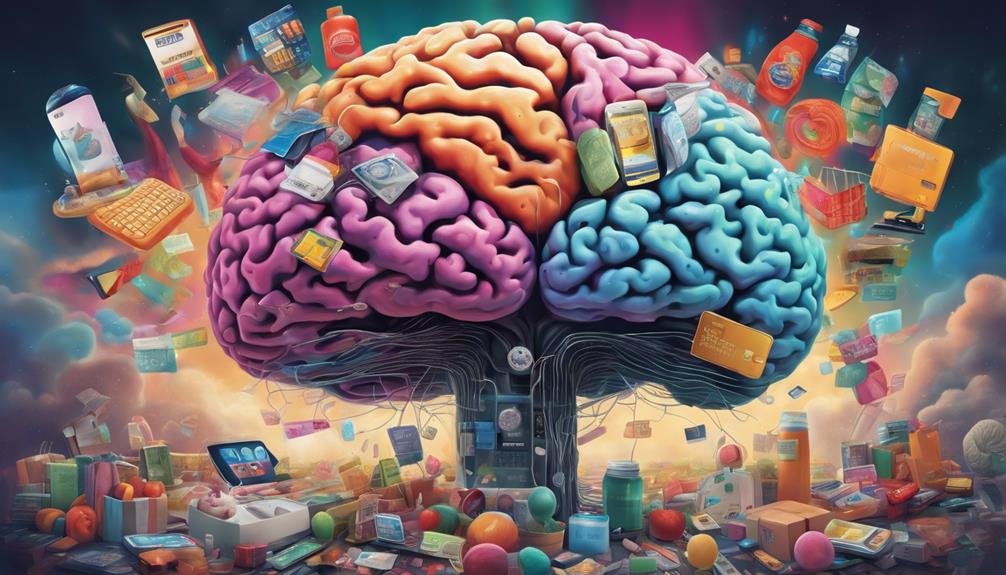
Consumer psychology is a complex and multifaceted field, with numerous factors influencing purchasing decisions. Marketers leverage tactics such as priming, scarcity, and emotional triggers to shape consumer behavior. Social proof, nostalgia, and loss aversion are additional strategies used to drive sales. Moreover, the allure of free gifts and upselling can greatly boost profitability. Effective advertising also relies on color psychology to create emotional connections with consumers. As we explore the intricacies of consumer psychology, the underlying motivations and decision-making processes that drive purchasing decisions become clearer, and the opportunities for businesses to effectively influence consumer behavior become more apparent.
The Power of Priming Effect
The Power of Priming Effect
Research has consistently demonstrated that the priming effect, a phenomenon in which subtle cues in our environment influence our thoughts, feelings, and behaviors, has a profound impact on consumer decision-making. This phenomenon has been exploited by marketers and advertisers to shape consumer behavior, often without the consumer even realizing it. The priming effect taps into the mental shortcuts that our brains use to make quick decisions, often relying on contextual cues to guide our choices.
Contextual cues, such as the color scheme, music, and even the scent of a store, can greatly influence consumer behavior. For instance, a study found that the scent of freshly baked cookies increased the likelihood of consumers purchasing kitchen utensils. Similarly, the use of calming music in a store can reduce anxiety and increase the amount of time consumers spend browsing.
Marketers can leverage the priming effect to create an atmosphere that subconsciously influences consumer behavior. By strategically placing contextual cues, businesses can nudge consumers towards making specific purchasing decisions. This is not manipulation, but rather an understanding of how our brains work and using that knowledge to create an optimal shopping experience. By harnessing the power of the priming effect, businesses can increase sales, improve customer satisfaction, and gain a competitive edge in the market.
Scarcity Tactics in Marketing
In the field of marketing, scarcity tactics are strategically employed to manipulate consumer behavior, often by creating a sense of urgency or exclusivity around a product or service. Two key aspects of this approach are limited time offers, which instill a fear of missing out in potential customers, and artificial demand creation, which fabricates a sense of scarcity to drive up demand. By understanding these tactics, businesses can harness the power of psychological influence to drive sales and boost revenue.
Limited Time Offers
Only 25% of consumers explicitly recall encountering limited-time offers, yet 60% of online shoppers admit to feeling pressured to make a purchase when faced with scarcity-based marketing tactics. This phenomenon highlights the potency of limited-time offers in influencing consumer behavior. By creating urgency windows, marketers can instill a sense of Expiration anxiety in potential buyers, prompting them to make a purchase sooner rather than later. This psychological manipulation tactic leverages the fear of missing out (FOMO) to drive sales and increase revenue. Savvy marketers understand that limited-time offers can be a powerful tool in their arsenal, allowing them to tap into the psychological triggers that drive consumer decision-making. By strategically deploying limited-time offers, businesses can create a sense of scarcity, exclusivity, and urgency, ultimately motivating customers to take action. By harnessing the power of limited-time offers, marketers can tap into new revenue streams and drive business growth. Additionally, the role of gamification in marketing can further amplify the effectiveness of scarcity-based tactics by incorporating interactive elements that engage consumers and encourage swift decision-making. By integrating countdown timers, reward systems, or exclusive unlockable deals, businesses can enhance the urgency effect and make the shopping experience more immersive. This strategic combination not only fosters customer engagement but also strengthens brand loyalty, ultimately leading to sustained business growth.
Artificial Demand Creation
Marketers often employ artificial demand creation strategies to manufacture a sense of scarcity, thereby fueling consumer desire and driving sales. By orchestrating an artificial sense of urgency, marketers can create a perceived value that motivates consumers to take action. This tactic is particularly effective in the digital age, where virtual hype can spread like wildfire, creating a false sense of scarcity that drives demand.
Artificial demand creation is often used to revive a brand's fortunes, breathing new life into stagnant products or services. By creating a sense of FOMO (fear of missing out), marketers can create a buzz around a product launch or promotion, generating excitement and anticipation. This can be achieved through targeted social media campaigns, email marketing, or influencer partnerships. By creating a sense of exclusivity, marketers can create a sense of prestige, making consumers feel like they're part of an elite group. By mastering the art of artificial demand creation, marketers can engineer a brand revival, driving sales and revenue through the roof.
Emotional Triggers of Buying
What drives consumers to open their wallets and make a purchase, often, is not a critical decision, but an emotional response to a particular stimulus. This emotional trigger can be a subtle yet powerful influencer, leading consumers to make impulsive buying decisions. In the domain of consumer psychology, understanding these emotional triggers is vital for marketers seeking to tap into the psyche of their target audience.
Mood swings, for instance, can greatly impact consumer behavior. A person's emotional state can sway their purchasing decisions, with positive emotions like excitement or joy often leading to increased spending. Conversely, negative emotions like anxiety or sadness can lead to decreased spending or even abandonment of purchases. Marketers can leverage this by creating experiences that evoke positive emotions, such as in-store events or engaging advertising campaigns.
Personal values also play a significant role in emotional triggers. Consumers often make purchasing decisions based on how well a product or brand aligns with their core values. For instance, environmentally conscious consumers may prioritize sustainable products, while socially responsible consumers may opt for brands that support social causes. By understanding the personal values of their target audience, marketers can craft marketing strategies that resonate with their audience on a deeper level, ultimately driving sales and brand loyalty.
Influence of Social Proof
When it comes to making purchasing decisions, consumers are often swayed by the actions and opinions of others. This phenomenon, known as social proof, demonstrates that people are more likely to adopt a behavior or try a product if they see others doing so. By leveraging social norms, businesses can tap into this powerful influence to drive consumer behavior and inform their marketing strategies.
People Trust the Crowd
In the absence of personal experience or direct evidence, people often rely on the actions and opinions of others to inform their own decisions, a phenomenon known as social proof. This psychological tendency is rooted in the human desire for social identity, where individuals seek to belong and conform to a particular group or community. When we observe others' behavior, we are more likely to adopt similar actions, a phenomenon known as herd behavior. This collective behavior is driven by the assumption that if many people are doing something, it must be correct or desirable. Marketers and advertisers tap into this psychological bias by showcasing customer testimonials, ratings, and reviews to create a sense of social consensus. By leveraging social proof, businesses can increase customer trust and credibility, ultimately driving sales and revenue. By understanding the power of social influence, marketers can craft persuasive messages that resonate with their target audience, ultimately driving business success.
Social Norms Prevail
Social norms, shaped by the collective behavior of a group, exert a profound influence on individual decision-making, as people tend to conform to the expectations and standards of their social environment. This phenomenon is rooted in the human desire for group identity and the need to belong. As a result, individuals often succumb to social pressure, adopting cultural values and norms that may not align with their personal beliefs.
- Social influence can be so powerful that it leads to a conformity bias, where people prioritize normative behavior over their own judgment.
- The fear of social exclusion can drive individuals to conform, even if it means sacrificing their autonomy.
- Social norms can also perpetuate a herd mentality, where the collective behavior of a group is adopted without critical evaluation.
- By understanding the influence of social norms, marketers can tap into the power of collective behavior, leveraging social proof to drive consumer decisions.
The Framing Effect on Choice
Most consumers are unaware that the way information is presented, or framed, can greatly influence their decisions. This phenomenon is known as the framing effect, and it can have a profound impact on consumer choice. The manner in which information is framed can alter the perceived value of a product or service, ultimately driving purchasing decisions.
One of the primary ways in which framing influences consumer choice is through risk framing. When a product or service is framed with regards to potential gains, consumers are more likely to take risks. Conversely, when framed with regards to potential losses, consumers become more risk-averse. For instance, a company may frame a new investment opportunity as a chance to 'gain 20% returns' rather than 'risk losing 20% of your investment.' This subtle difference in framing can substantially impact investor behavior.
Contextual cues also play an important role in the framing effect. The presentation of information, including font, color, and imagery, can influence consumer perceptions and attitudes. For example, a product described as '90% fat-free' may be perceived more positively than one described as '10% fat.' This subtle difference in framing can greatly impact consumer attitudes towards a product. By understanding the framing effect, businesses can strategically present information to influence consumer choice and drive sales.
Anchoring in Pricing Strategies
In the domain of pricing strategies, anchoring plays a subtle yet significant role in shaping consumers' perceptions of value. By strategically setting a reference point, businesses can influence customers' judgments of affordability and worth, often leading to increased sales and revenue. This phenomenon is rooted in the way our minds process information, making anchoring a powerful tool in the hands of marketers and retailers.
Price Perception Tricks
One of the most effective price perception tricks employed by marketers is anchoring, a psychological phenomenon where the initial price of a product influences a consumer's perception of its value. This phenomenon is rooted in the concept of mental accounting, where consumers create mental price frames that influence their purchasing decisions.
Marketers leverage anchoring by strategically setting price frames to manipulate consumer perception. For instance, a product initially priced at $100 may be perceived as expensive, but when discounted to $80, it suddenly appears more affordable. This pricing strategy creates a powerful psychological impact, as the initial price anchor influences the consumer's perception of the product's value.
Some common anchoring techniques include:
- Comparative pricing: presenting a higher "list price" to make the sale price appear more attractive
- Bundle pricing: offering a bundle deal to create a new price anchor
- Price endings: using specific price endings (e.g., $9.99) to create a psychological impact
- Price promotions: offering limited-time discounts to create a sense of urgency
Anchor Point Influence
The strategic placement of anchor points is vital in pricing strategies, as it greatly influences consumer perception and purchasing decisions. Anchoring, a cognitive bias, occurs when consumers rely too heavily on the first piece of information they receive, using it as a reference point for subsequent judgments. In pricing, initial anchors set the tone for consumer evaluation, shaping their perception of value and affordability.
When presented with multiple options, consumers tend to compare prices relative to an initial anchor, rather than evaluating each option independently. For instance, if a luxury brand positions its premium product alongside a more affordable alternative, the latter appears more reasonably priced by comparison. Contextual cues, such as the surroundings, packaging, and marketing messaging, further reinforce the anchor's influence. Savvy marketers strategically place anchor points to create a desired pricing narrative, guiding consumer perceptions and ultimately driving sales. By understanding the power of anchor points, businesses can craft effective pricing strategies that resonate with their target audience and drive revenue growth.
The Role of Nostalgia Marketing
Nostalgia marketing capitalizes on consumers' sentimental longing for the past, strategically leveraging fond memories to foster brand loyalty and drive sales. This marketing approach taps into the Retro Revival trend, where consumers seek comfort in familiar brands and products that evoke a sense of nostalgia. Sentimental Advertising campaigns often feature vintage imagery, classic logos, and iconic slogans to evoke a sense of nostalgia and emotional connection with the brand.
The power of nostalgia marketing lies in its ability to:
- Create an emotional connection with consumers, increasing brand loyalty and advocacy
- Differentiate a brand from competitors, making it more memorable and relatable
- Tap into the collective cultural consciousness, evoking a sense of shared experience and community
- Drive sales and increase revenue, as consumers are more likely to purchase from a brand that evokes a positive emotional response
Loss Aversion in Consumerism
As consumers increasingly seek comfort in familiar brands, another psychological phenomenon comes into play: the fear of loss, which can be a powerful motivator in consumer decision-making. This phenomenon is known as loss aversion, a fundamental concept in behavioral economics. It suggests that the pain of losing something is psychologically more powerful than the pleasure of gaining something of equal value. In the context of consumerism, loss aversion can manifest in various ways.
One prominent example is the fear of missing out (FOMO), where consumers are driven to make purchases to avoid the perceived loss of a limited-time opportunity. This fear can lead to impulsive, emotional spending, often resulting in buyer's remorse. Furthermore, loss aversion can influence consumers' risk tolerance, as they may be more willing to take risks to avoid losses than to achieve gains. This can result in consumers opting for more expensive or premium products, even if they may not necessarily provide additional value.
Marketers can leverage loss aversion by framing their messaging around the potential losses or missed opportunities associated with not purchasing a product. For instance, a company might emphasize the potential loss of time or money if a customer fails to take advantage of a limited-time offer. By tapping into the psychological fear of loss, marketers can create a sense of urgency and motivate consumers to make a purchase.
The Allure of Free Gifts
Many consumers are irresistibly drawn to offers that include free gifts, a phenomenon rooted in the psychological concept of reciprocity, where the recipient feels an innate obligation to return the favor. This instinctual response is capitalized on by marketers, who use free gifts as a strategic tool to influence consumer behavior. By providing an unexpected bonus, businesses create a sense of indebtedness, encouraging customers to reciprocate through loyalty and repeat purchases.
The allure of free gifts is further amplified by the element of surprise, as consumers are more likely to engage with an offer that exceeds their Gift Expectations. This emotional response is rooted in the brain's reward system, which is stimulated by Free Surprises, releasing feel-good hormones like dopamine. To leverage this psychological dynamic, marketers can:
- Offer limited-time free gifts to create a sense of urgency
- Bundle products with complementary items to increase perceived value
- Provide exclusive discounts to loyalty program members
- Create mystery gifts or surprise bonuses to foster excitement and anticipation
The Science of Upselling
One pivotal strategy in the marketer's arsenal is leveraging, a subtle yet powerful technique that can greatly boost average order value and profitability. By offering complementary products or upgraded versions of existing ones, marketers can capitalize on the customer's initial purchase momentum, increasing the likelihood of a larger sale. Effective upsell strategies involve understanding customer needs and desires, as well as identifying opportunities to enhance their overall experience.
To maximize the impact of upselling, marketers must employ customer segmentation techniques to identify high-value targets. By categorizing customers based on their purchasing habits, demographics, and behavior, marketers can tailor their upsell approaches to resonate with each segment. For instance, premium customers may be offered high-end products or exclusive services, while budget-conscious customers may be presented with more affordable alternatives.
A well-executed upsell strategy can lead to significant revenue growth and enhanced customer satisfaction. However, it is essential to strike a delicate balance between persuasion and aggression, ensuring that the upsell approach does not come across as overly pushy or intrusive. By mastering the art of upselling, marketers can tap into new revenue streams, strengthen customer relationships, and gain a competitive edge in the market.
Color Psychology in Advertising
Beyond the domain of upselling, another subtle yet potent influencer of consumer behavior lies in the strategic use of color, which can evoke emotions, convey brand identity, and ultimately drive purchasing decisions. The art of color psychology in advertising is a deliberate and calculated approach to create an emotional connection with consumers. By leveraging the psychological effects of colors, brands can craft a visual narrative that resonates with their target audience.
Here are four key considerations for harnessing the power of color psychology in advertising:
- Brand Identity: Consistent color schemes can solidify a brand's visual identity, making it instantly recognizable and memorable.
- Visual Hierarchy: Strategic color choices can guide the consumer's attention, creating a clear visual flow and drawing focus to key messaging or calls-to-action.
- Color Harmony: The thoughtful selection of colors can create an emotional resonance, evoking feelings of excitement, trust, or sophistication, and ultimately driving purchasing decisions.
- Design Elements: Colors can be used to enhance design elements, such as typography, imagery, and textures, to create a cohesive and engaging visual experience.
Frequently Asked Questions
How Do Brands Create a Sense of Urgency in Their Marketing Campaigns?
When the clock is ticking, brands can strike while the iron is hot by creating a sense of urgency in their marketing campaigns. Scarcity tactics, such as limited-time offers, are particularly effective in motivating consumers to take action. By imposing a deadline, brands can tap into the fear of missing out (FOMO), prompting customers to make a purchase before the opportunity expires. Limited-time promotions and flash sales are also potent tools in driving conversions and boosting revenue.
What Role Does Personalization Play in Influencing Consumer Behavior?
Personalization plays a pivotal role in shaping consumer behavior. By leveraging Dynamic Profiling, brands can tailor their messages to resonate with individual preferences, fostering an Emotional Connection that drives engagement and loyalty. This targeted approach enables brands to speak directly to the consumer's needs, desires, and pain points, ultimately influencing purchasing decisions and cultivating long-term brand affinity.
Can Consumers Be Manipulated Into Making Impulse Purchases?
Manipulation is a strong term, but yes, consumers can be subtly nudged into making impulse purchases. Savvy marketers exploit impulse triggers, leveraging psychological biases to sway buying habits. Strategic product placement, limited-time offers, and emotionally charged advertising all contribute to an environment conducive to impulsive decision-making. By understanding and manipulating these triggers, businesses can influence consumer behavior, often without the individual even realizing it.
How Do Cultural Differences Impact Consumer Psychology and Behavior?
Can cultural differences be ignored in the pursuit of a global consumer market? Hardly. Cultural norms, ethnic identity, social values, national pride, and religious beliefs all shape consumer psychology and behavior. In Japan, respect for elders influences purchasing decisions, while in India, religious beliefs impact food choices. Understanding these differences is essential for marketers seeking to resonate with diverse consumer bases.
What Is the Optimal Frequency for Advertising to Avoid Consumer Fatigue?
Optimizing ad frequency is essential to avoid consumer fatigue. Implementing ad frequency caps guarantees that target audiences are not overwhelmed, reducing the likelihood of irritation and brand backlash. Effective audience segmentation is key to determining the optimal frequency, as different demographics respond differently to advertising stimuli. By striking the right balance, marketers can maximize brand awareness while minimizing consumer fatigue, ultimately driving conversions and revenue growth.

